Intro
I’d never been to Open House before. It had been going since 1992, starting off in London before spreading around the world. I’d only heard of it around 2010, but had not been particularly motivated to visit any buildings. This year, I tried to book a trio - 10 Downing Street was done by ballot. Despite reciprocating with a friend to double my chances, I wasn’t successful. When the booking opened for other popular venues, it was pandemonium, and I emerged scathed, with just 1 out of the 2 locations I wanted (no luck with Lloyds of London building)
.
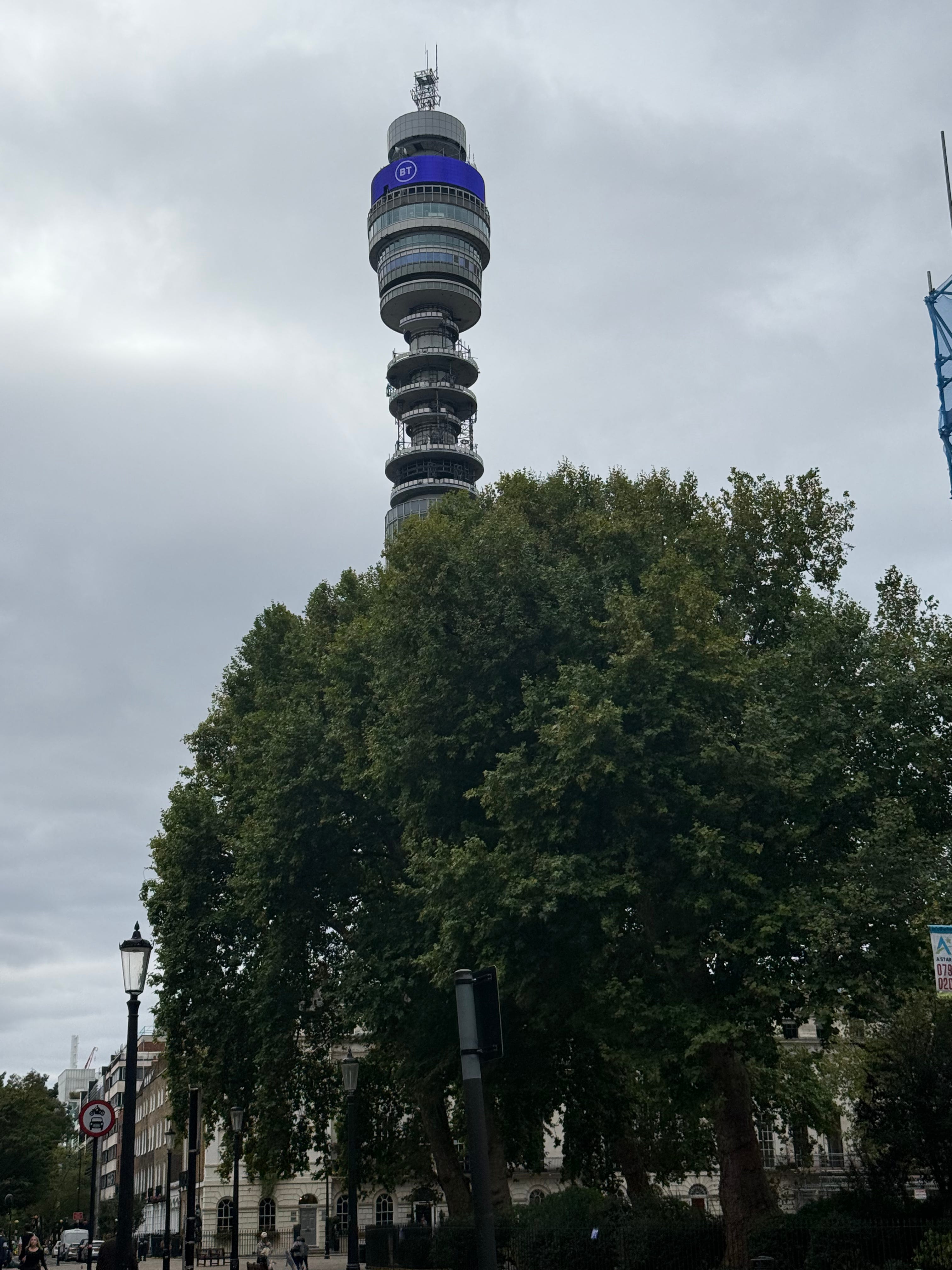
BT Tower is the imposing structure in the heart of the city, and would be on any Londoner’s radar, especially if they owned radio equipment. It was famed for its revolving restaurant, offering fine views over the city.
History
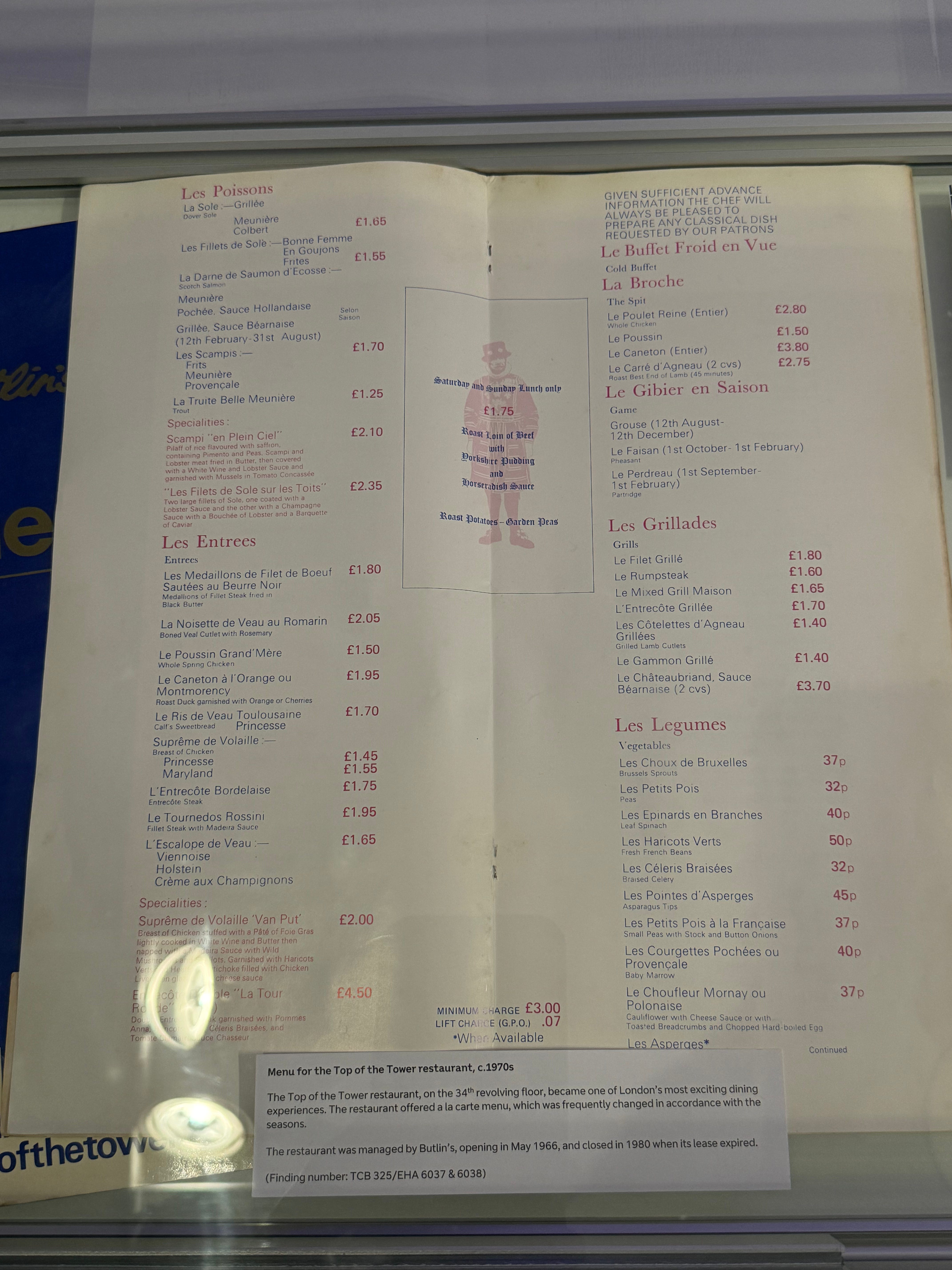
There were a few security hoops to jump through. We had to confirm our details after booking, and had to bring ID to match it. This was less about tout control and more about safety. We have restrictions on bag sizes at concerts after the Manchester Arena bombing, we have a ring of steel in the square mile after the IRA bombings in the early 90s, and BT Tower, or Post Office Tower/Telecom Tower as it was known then had a bomb in 1971 by an anarchist far-left group called the Angry Brigade. The consequence of the bomb was the popular attraction, the observation tower, was closed to the public. The restaurant, which I didn’t appreciate was open to the public, was operated by Butlins! It continued until its lease ran out in 1980, but became invite only after the bomb.
I spoke to my dad before I went, and he said he visited it in 1966. He’d arrived that year, and was advised that it was a worthy attraction. His memory of it is sketchy, but he must’ve been to the observation tower. Certainly for people like us (vegetarians), the menu wasn’t particularly enticing. We went to Butlins a couple of times in the 80s, and I probably subsisted on chips, but for this restaurant, they had fancy French dining. British cuisine back then would’ve been even more questionable than it is today, and in 1965 in nearby Soho, the capital just got its first pizzeria (Pizza Express), so dining out even in fancy places back then was not like it is today with the vibrant cosmopolitan restaurant scene.
I was supplementing the information I was learning with a little read into the tower’s history. One of my favourite facts, which is now a factoid (something that sounds like a fact but is in fact erroneous) is that the tower wasn’t on Ordnance Survey maps. Information about the tower was an official secret due to its importance in crucial telecoms (the microwave network), and despite it being prominent as the tallest building in the UK from 1964 to 1980, technically remained secret until Kate Hoey mentioned it in parliament deliberately in 1993 using parliamentary privilege, so that it would become a matter of public record. Whilst the secrecy element is true, it did appear on OS maps prior to that revelation. In a 1978 trial of an investigative journalist (who 2 years earlier had revealed GCHQ), the judge referred to it as simply ‘Location 23’.
Visit
I turned up just in time. My slot was 1:15 to 2, and I got to the building spot on. There was quite the queue outside - it was all my group. It was a good 15 minutes until they opened the doors, started processing everyone and I got in. I asked the security team in the entrance lobby if there were any handouts, and they said they don’t have any, and to check inside to see if there was. I would’ve been happy with just a DL sized flyer branded with BT Tower as a small memento.
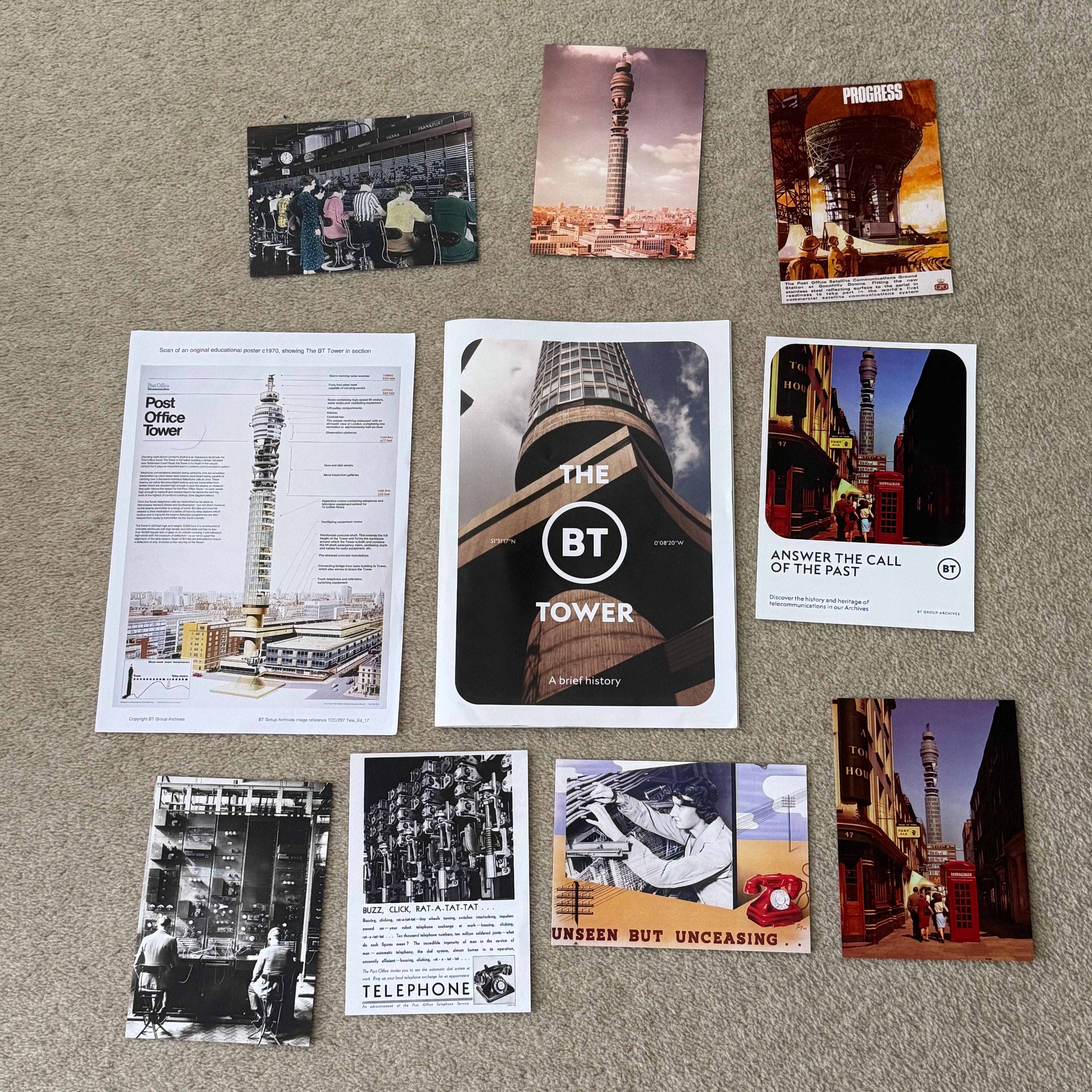
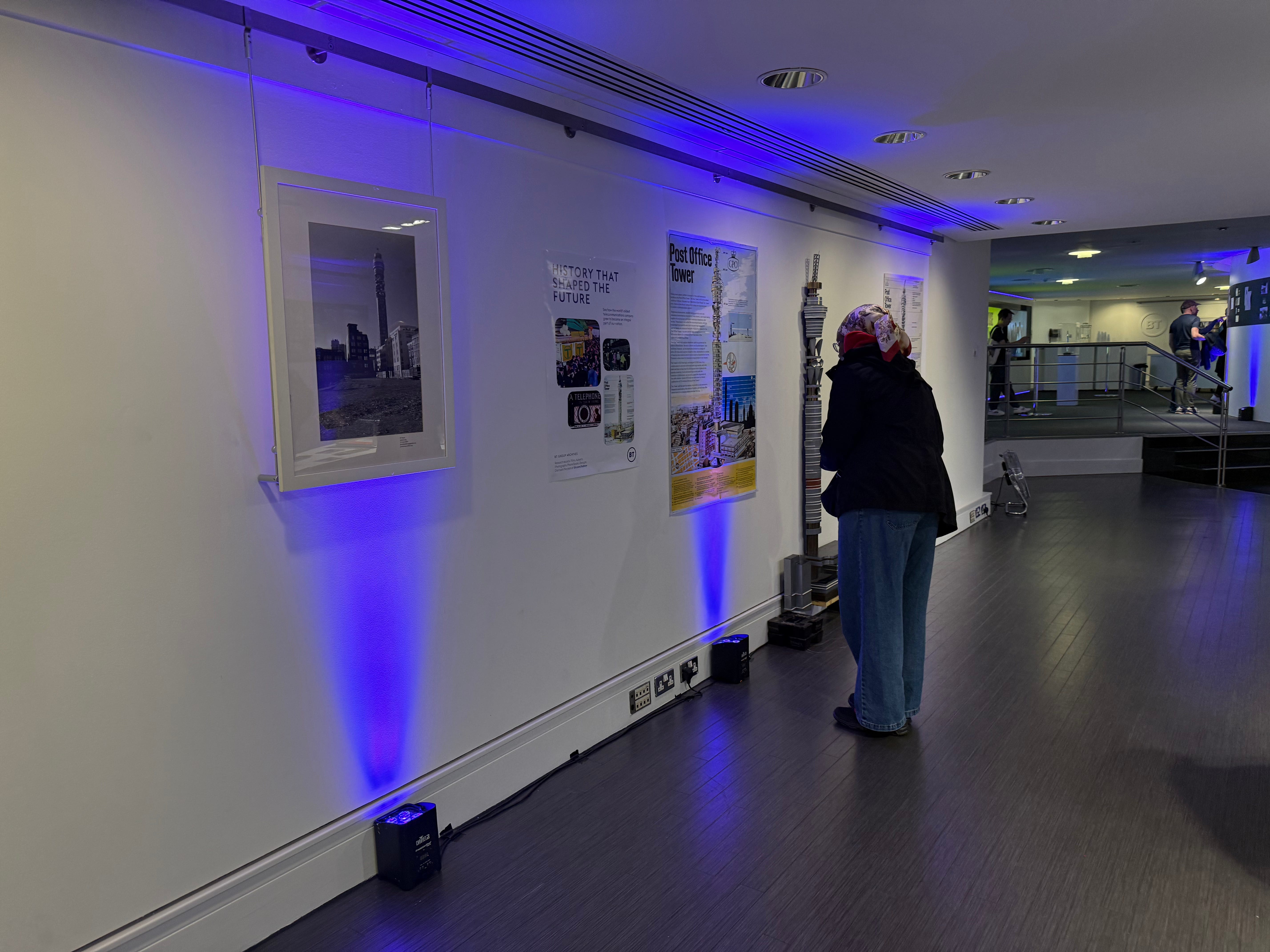
In the foyer beyond, there was some history from their archives. I linger. I absorb every bit of information. The first thing I did was grab the booklet and handouts - there was quite a significant amount of goodies, and the archiver in me was glad to grab such a haul.
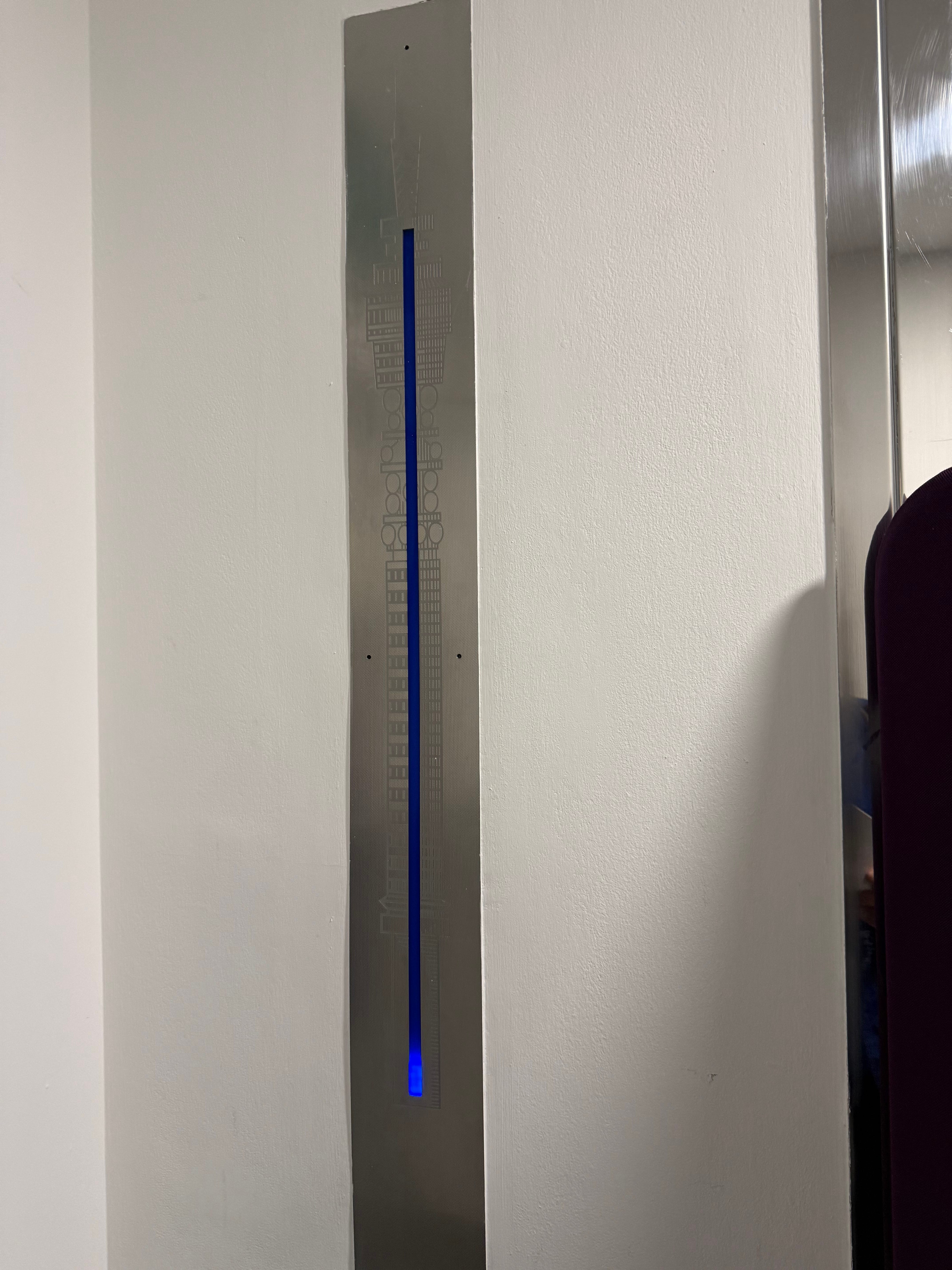
I did see a sign talking about reduced lift capacity which meant visits were now cut down to 30 minutes instead of 45 (and 15 were lost to the entry process). Perhaps I should’ve progressed faster to the main attraction….! I was nudged along (told that I should check this stuff out after the trip up) so I got in the queue to the lift. Only one was working, hence the queue. I noted a cool feature on the broken lift. It was an etching of the tower’s outline, with a light tube running up the centre indicating where the lift had reached. This was lit up on the broken lift, but whilst queueing, I asked to see it on the working lift, but sadly it was broken on that! I was gutted…..but then when it was my turn, I got into the lift and - it was working!! Oh how my heart jumped with glee. I wanted to document it, but in an enclosed space, I felt halfway between an annoying tourist and an annoying livestreamer. I wanted to tell everyone about it, but I was mindful of ruining the commentary of the video. This video had the potential to go viral and lead to the success of this project (and my subsequent downfall, much later, for frankly unjust reasons), so the audio needed to be as clean as possible. The lift wasn’t particularly fast, but we got there eventually, the doors opened and….
….we’d arrived!
The revolving floor
The immediate feeling wasn’t wow. Firstly I was drawn to the demarcation between the fixed and the rotating position. I was curious how was it moved. I knew it was 22 minutes per revolution (I was hoping they would do 22 revolutions per minute for us, but sadly we weren’t treated to ‘Fairground Ride Mode’). I put one foot on the fixed, and one on the moving side, and it slowly moved around.
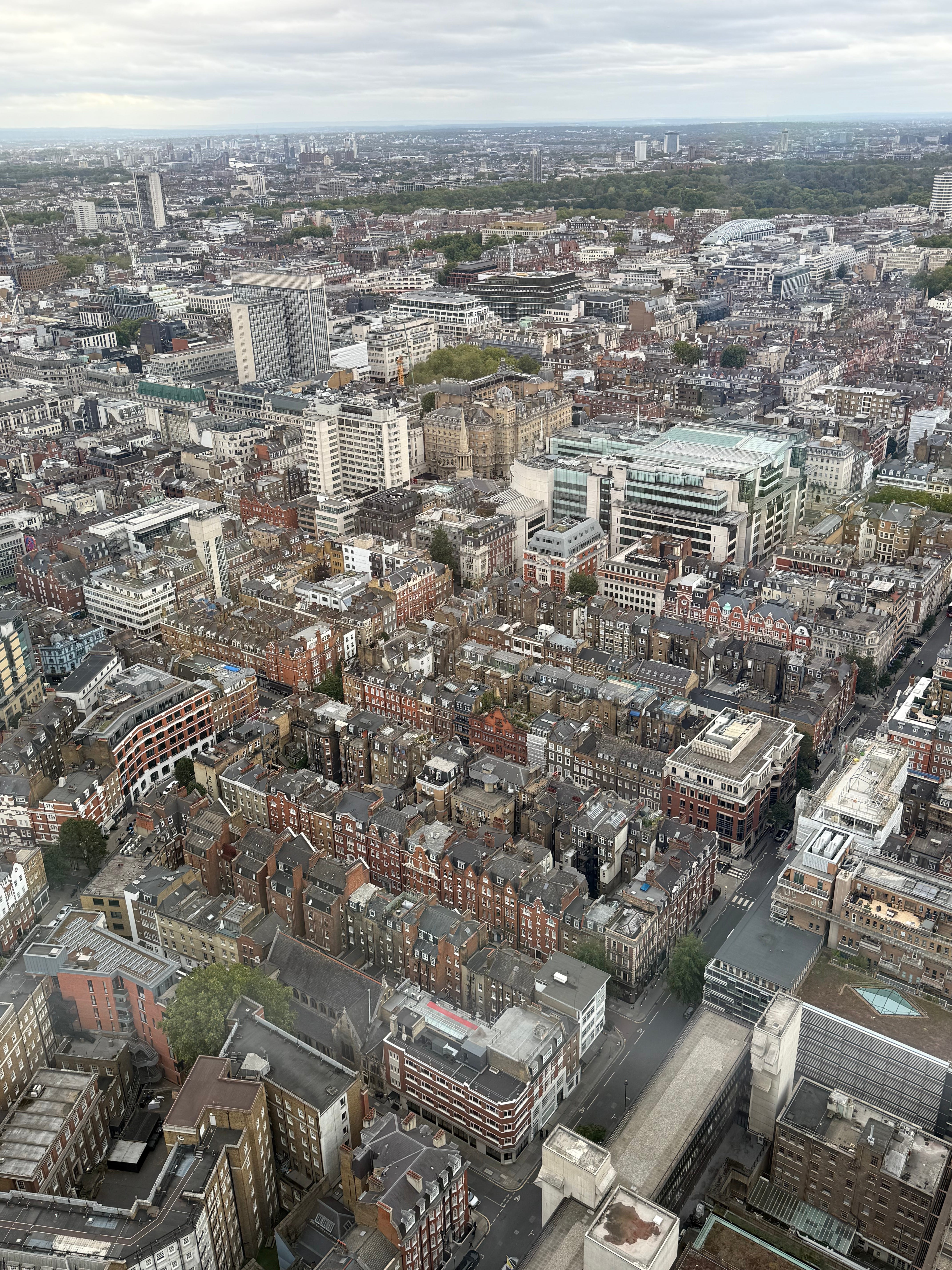
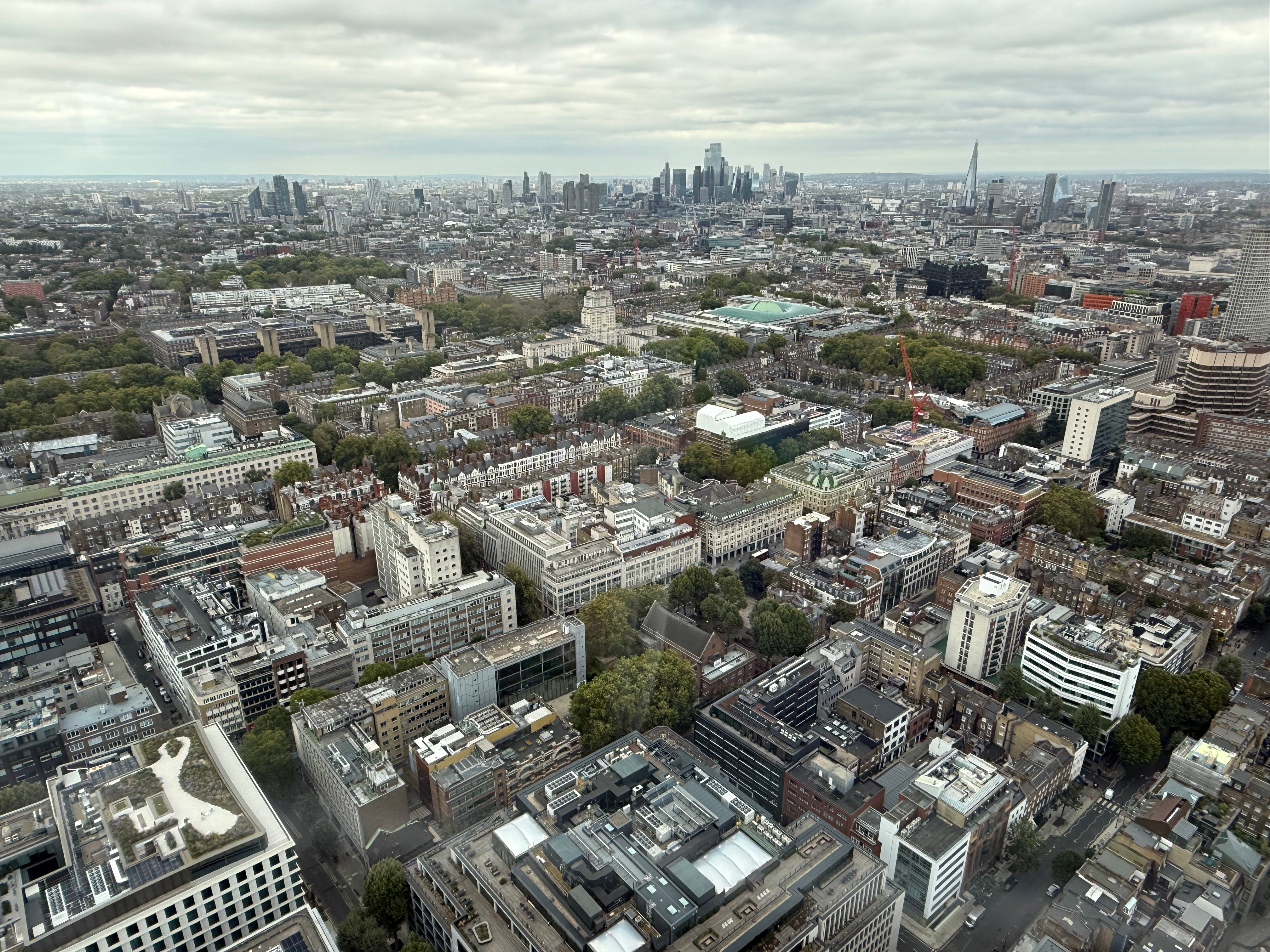
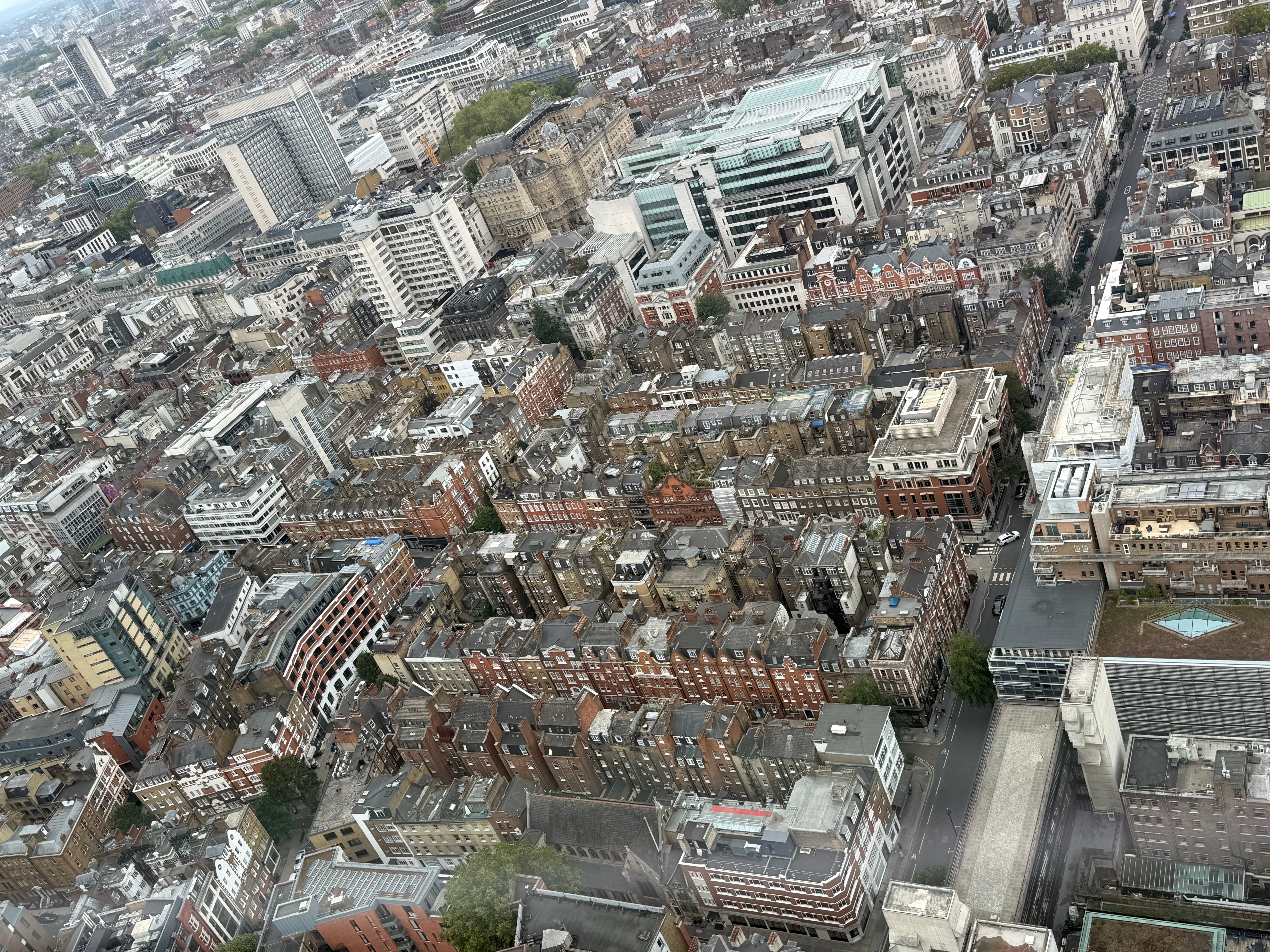
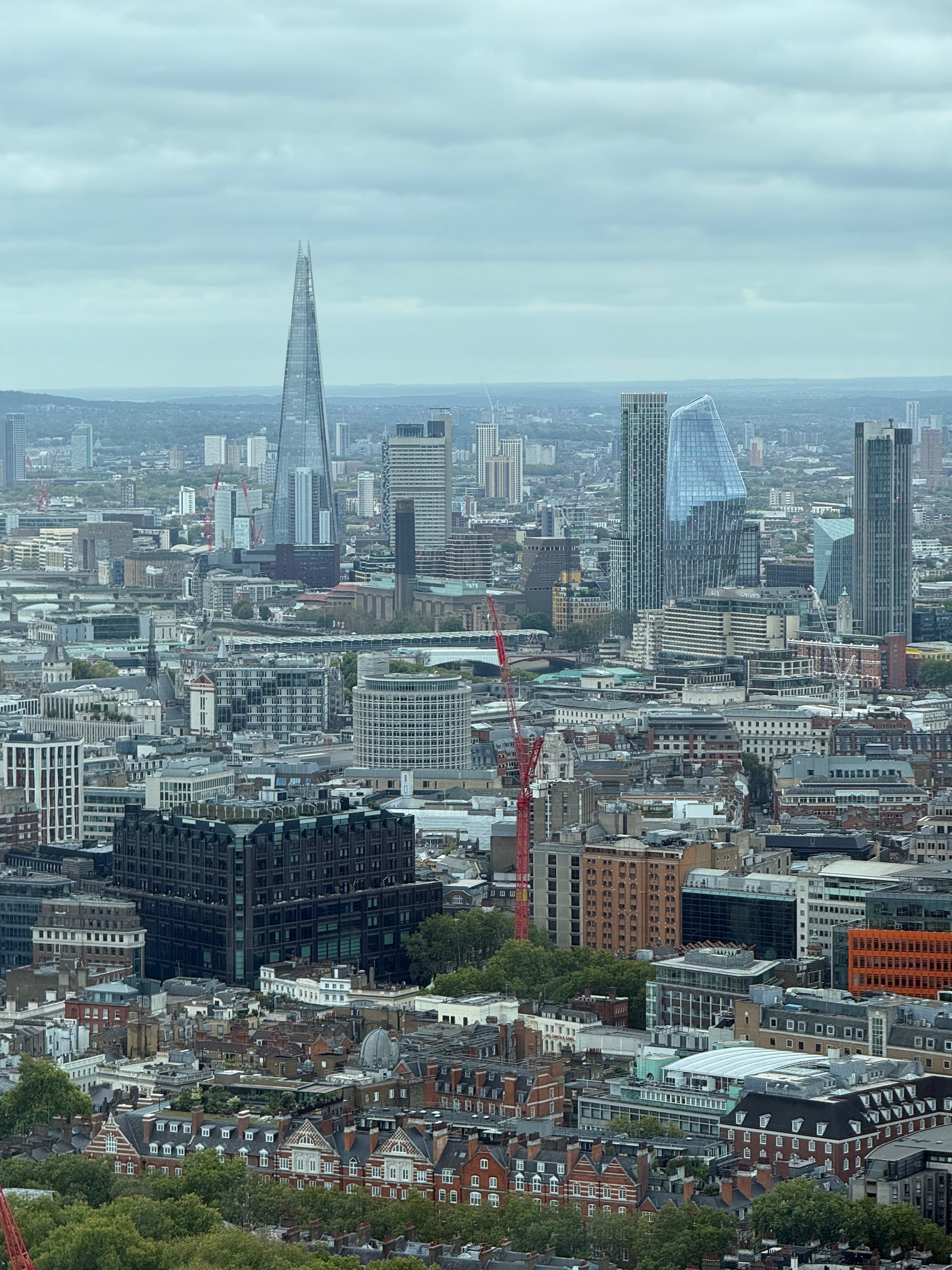
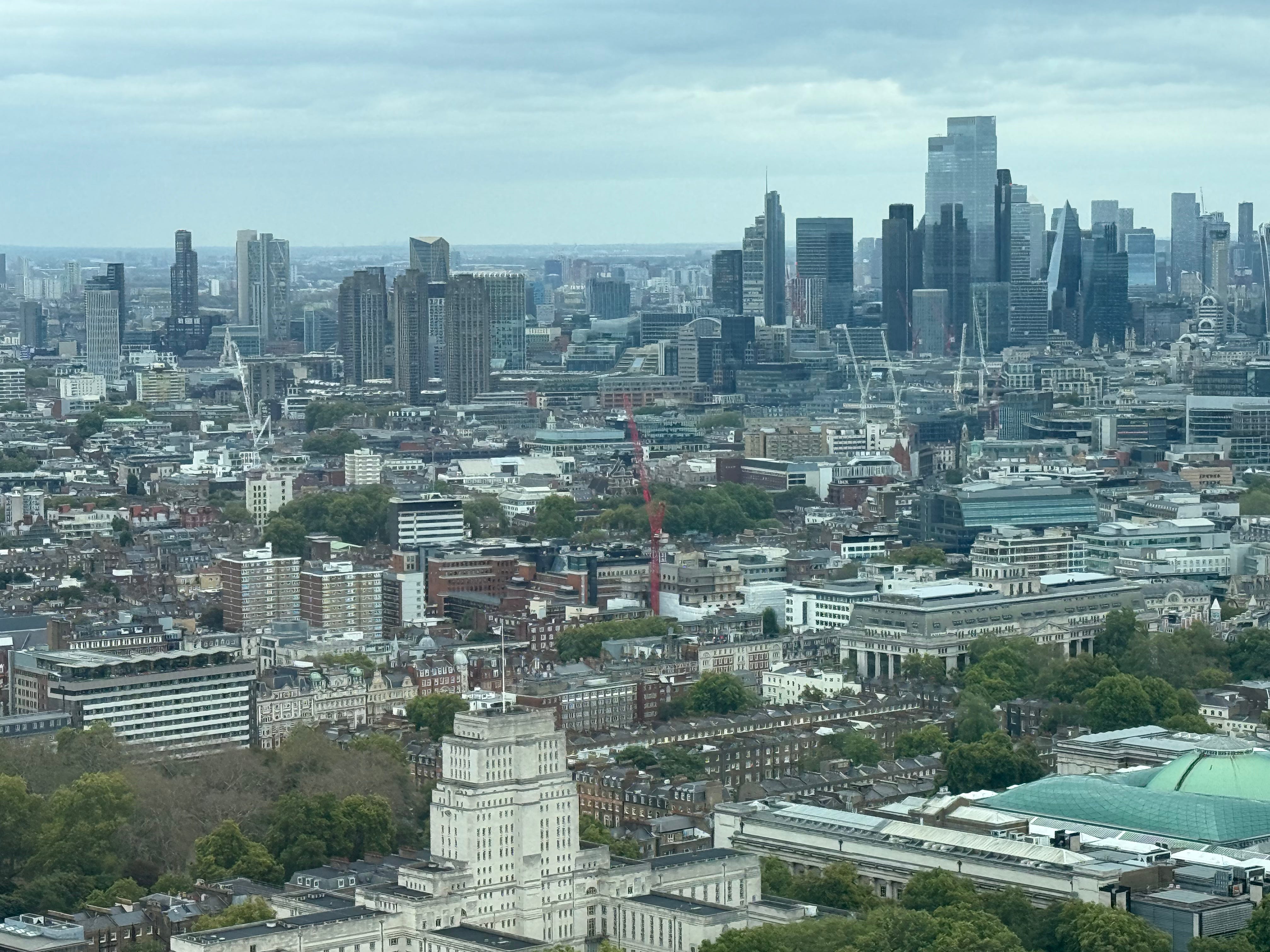
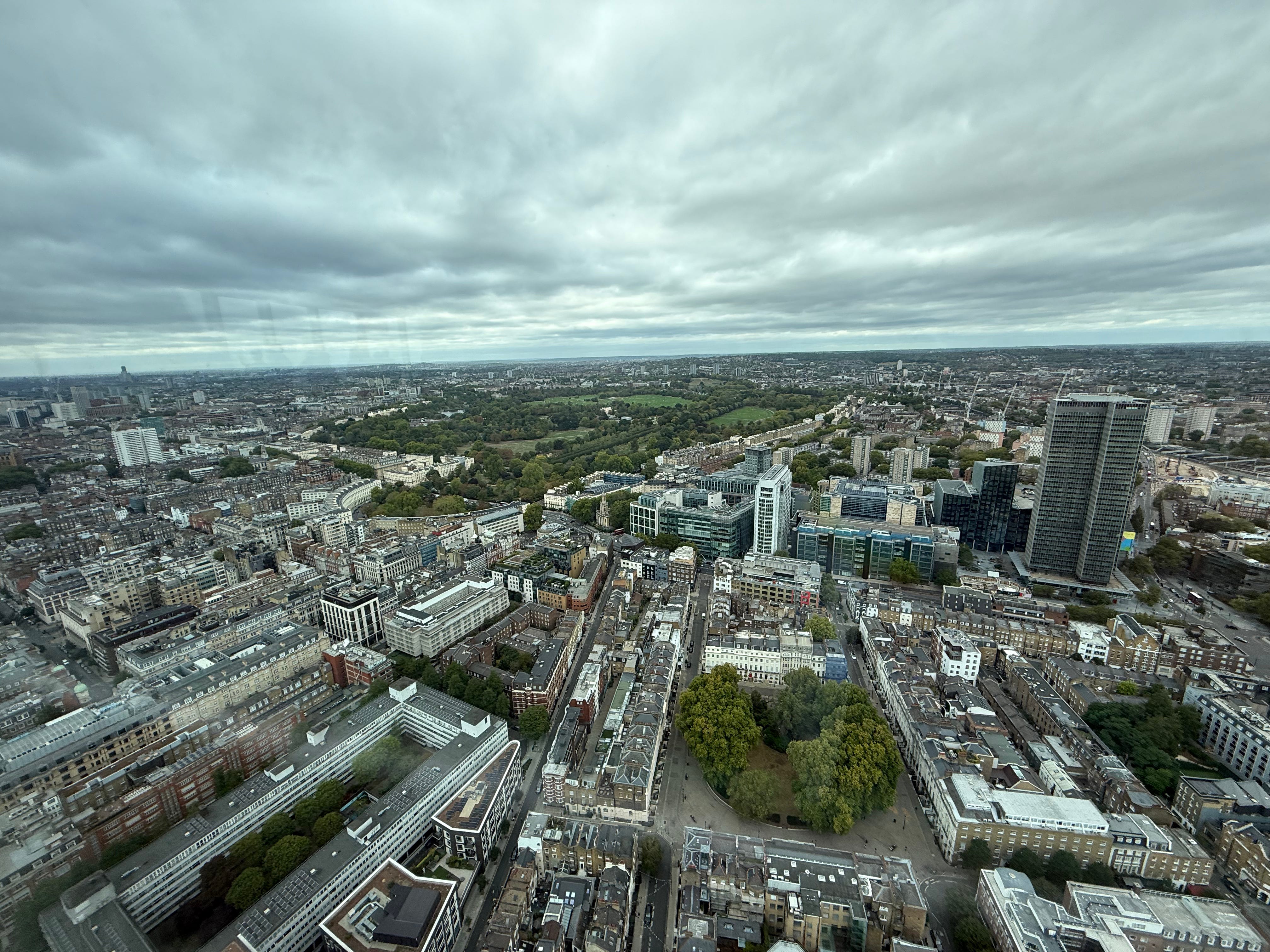
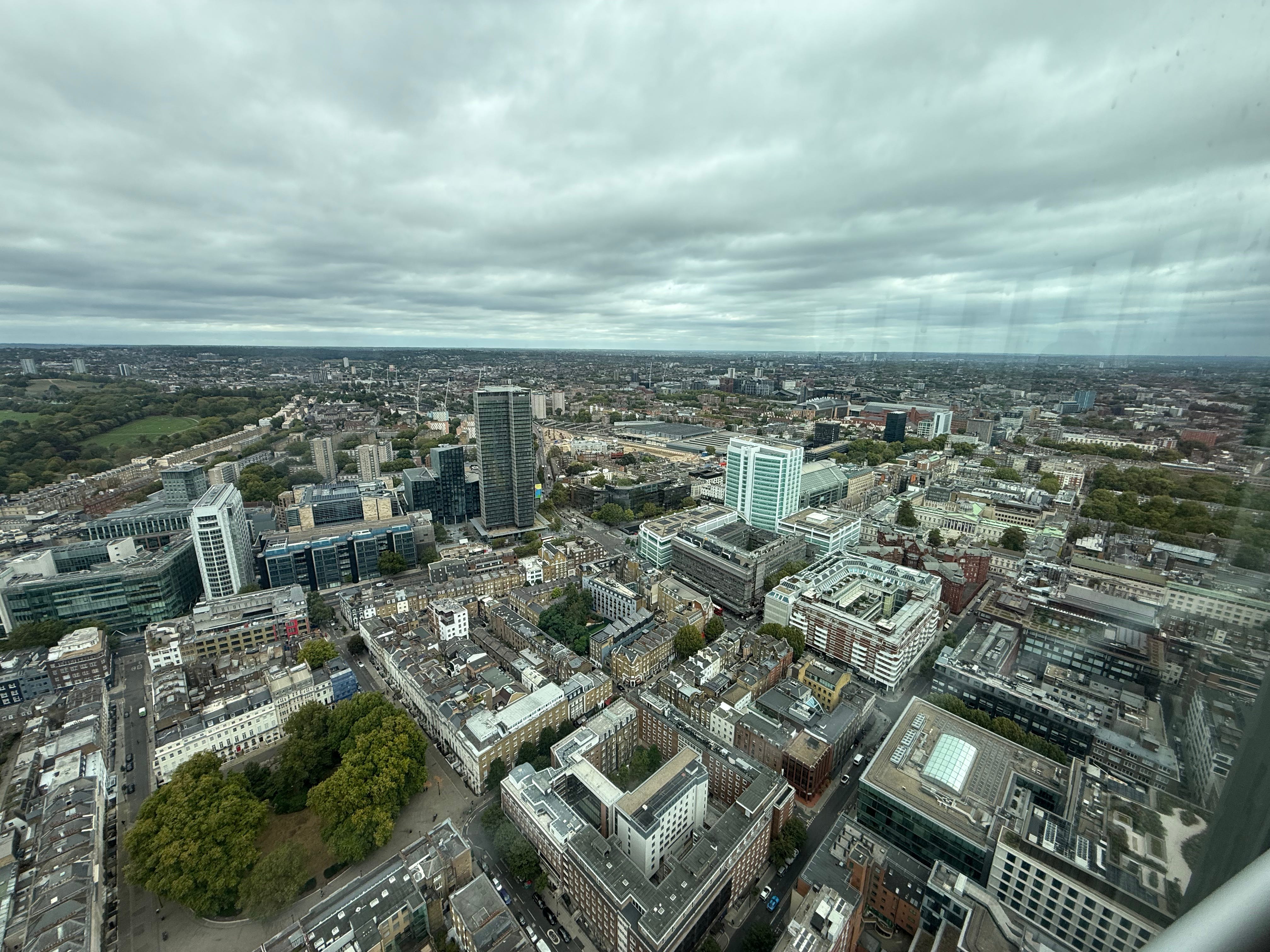
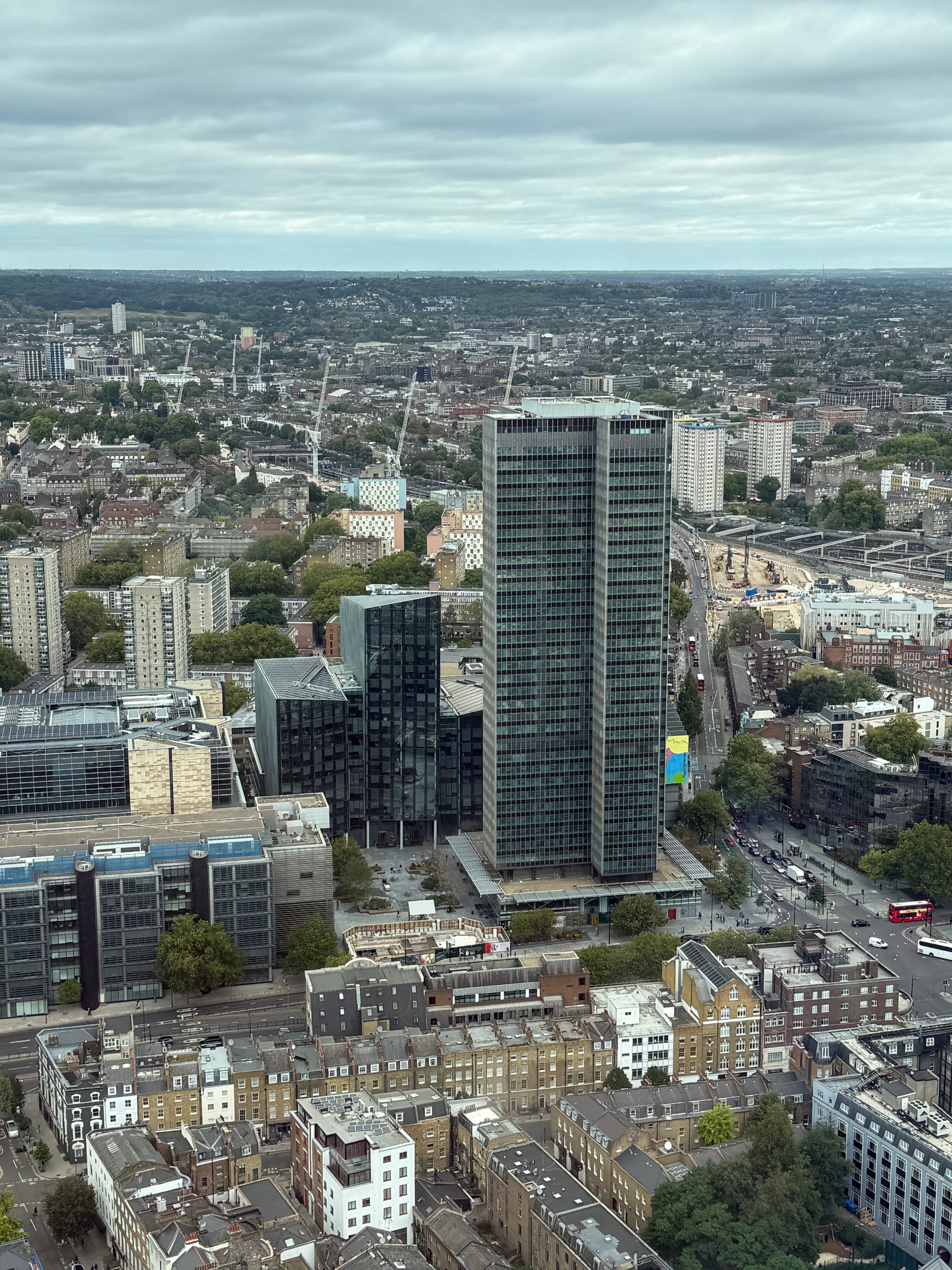
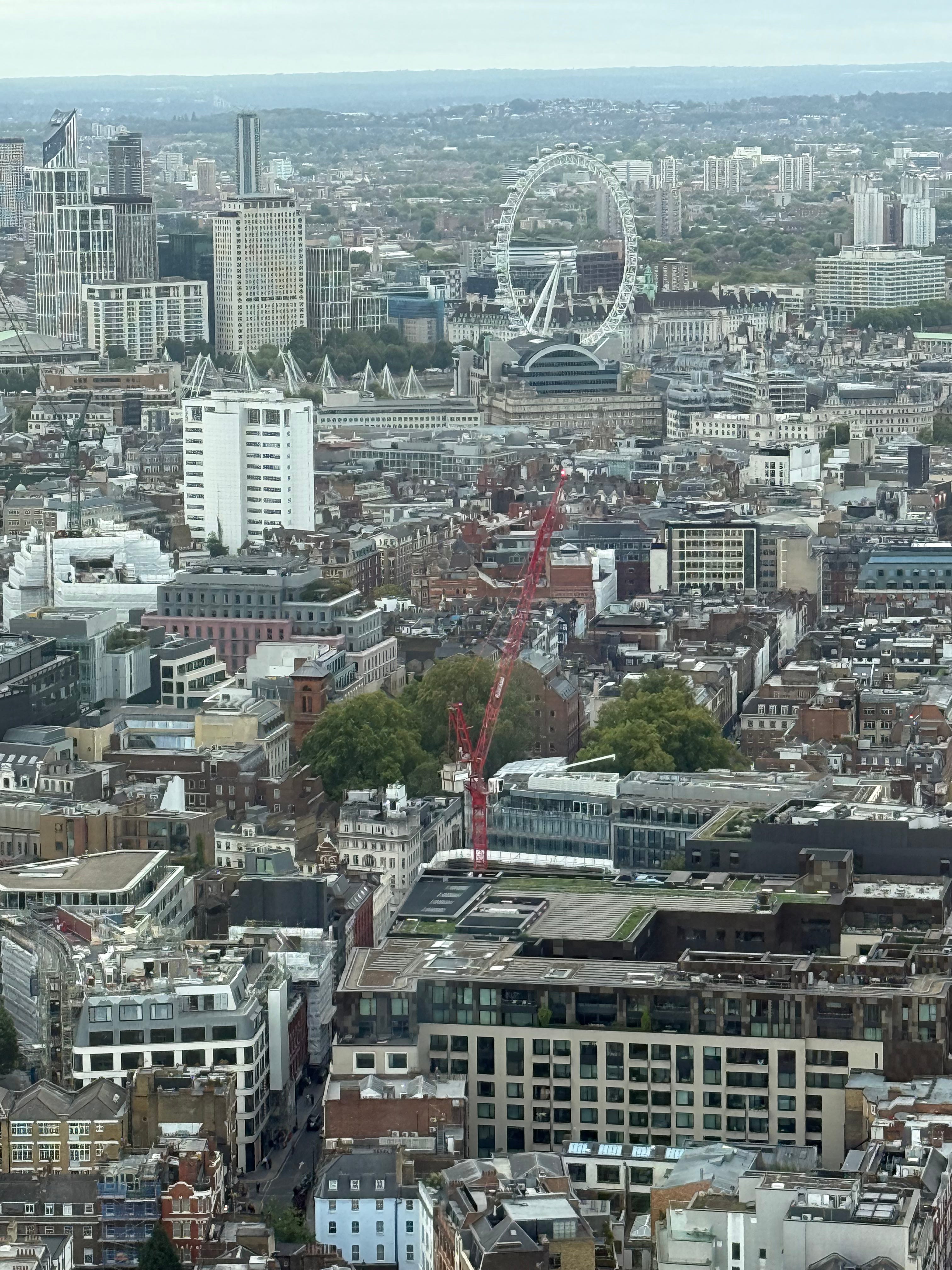
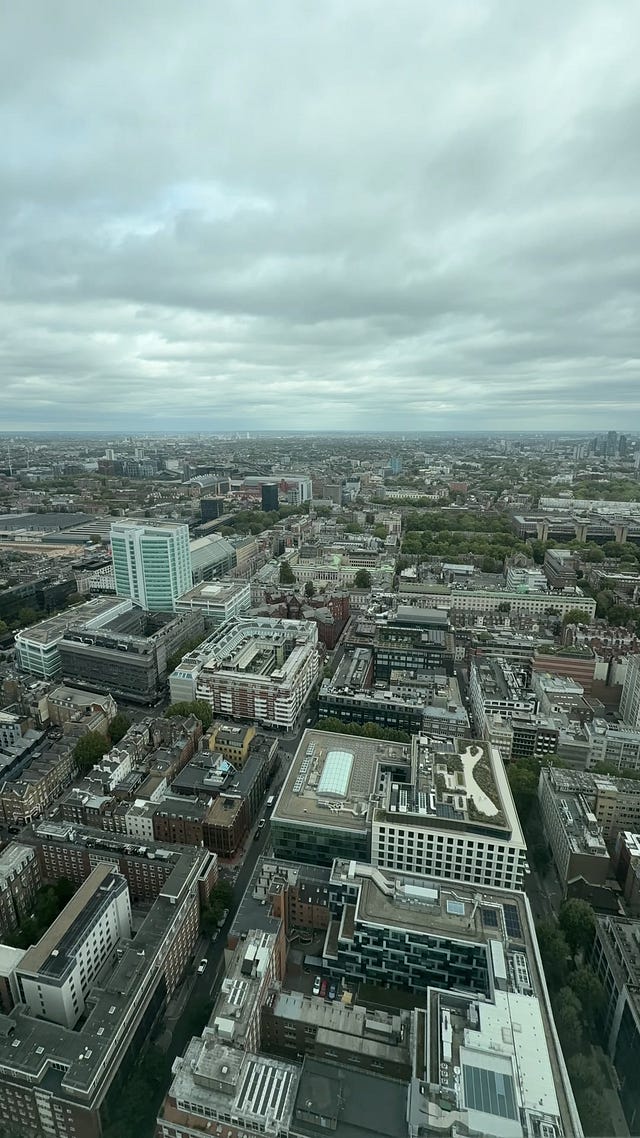
I wandered over to the edge, to the window and started looking around. Central London was once a vast region to me that I only knew pockets of, but over recent years I’ve spent a lot of time working and living around there and my topography has increased hugely. I’m familiar with most of it at street level, but this opened up a whole new dimension.
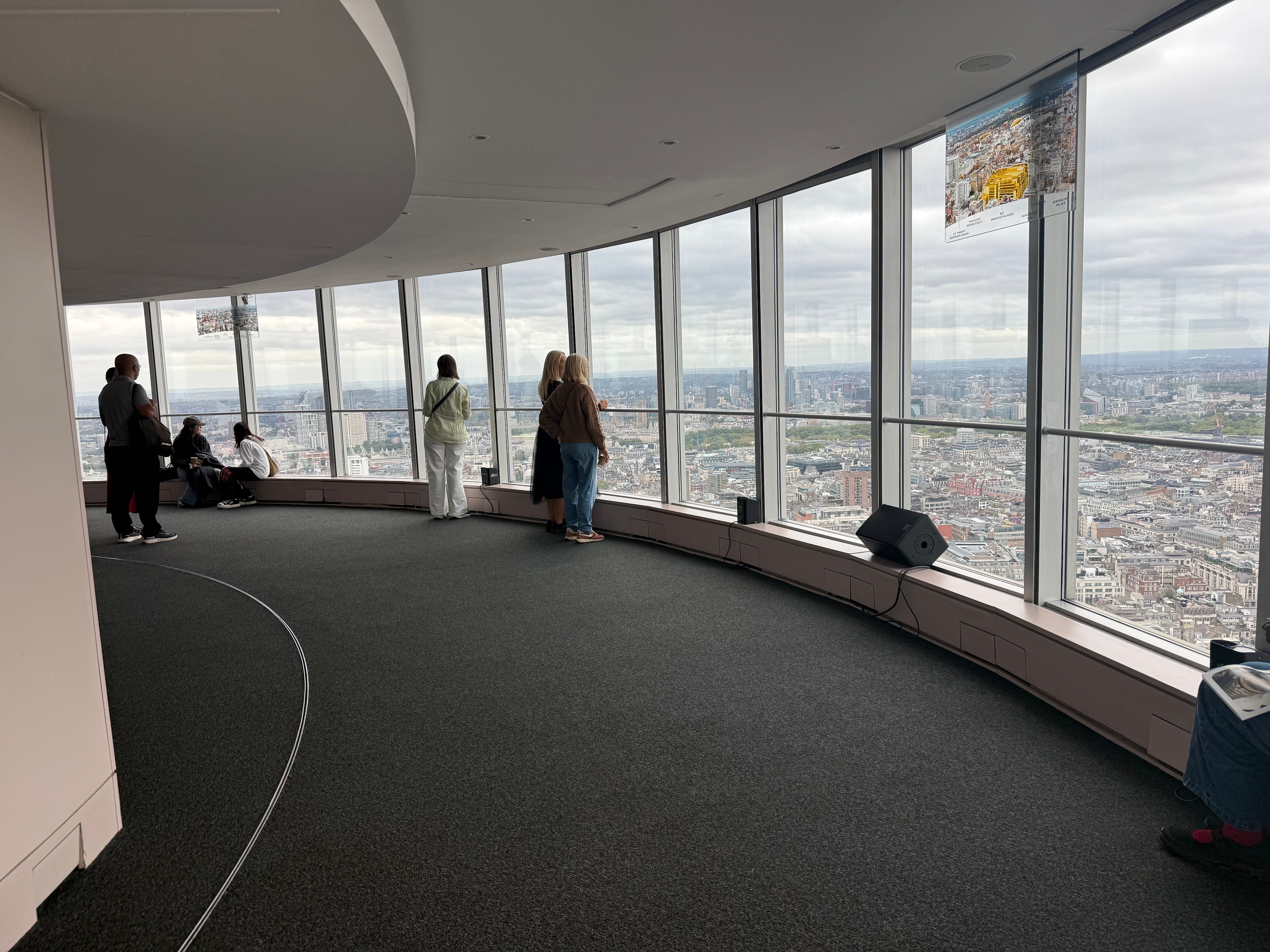
There was such a mix of architecture, layouts and interesting buildings to catch your eye. There’s so much greenery, which I don’t think we necessarily realise or appreciate. I first noted it in 2013 when Istanbul had protests over the development of the last green space in the city centre.
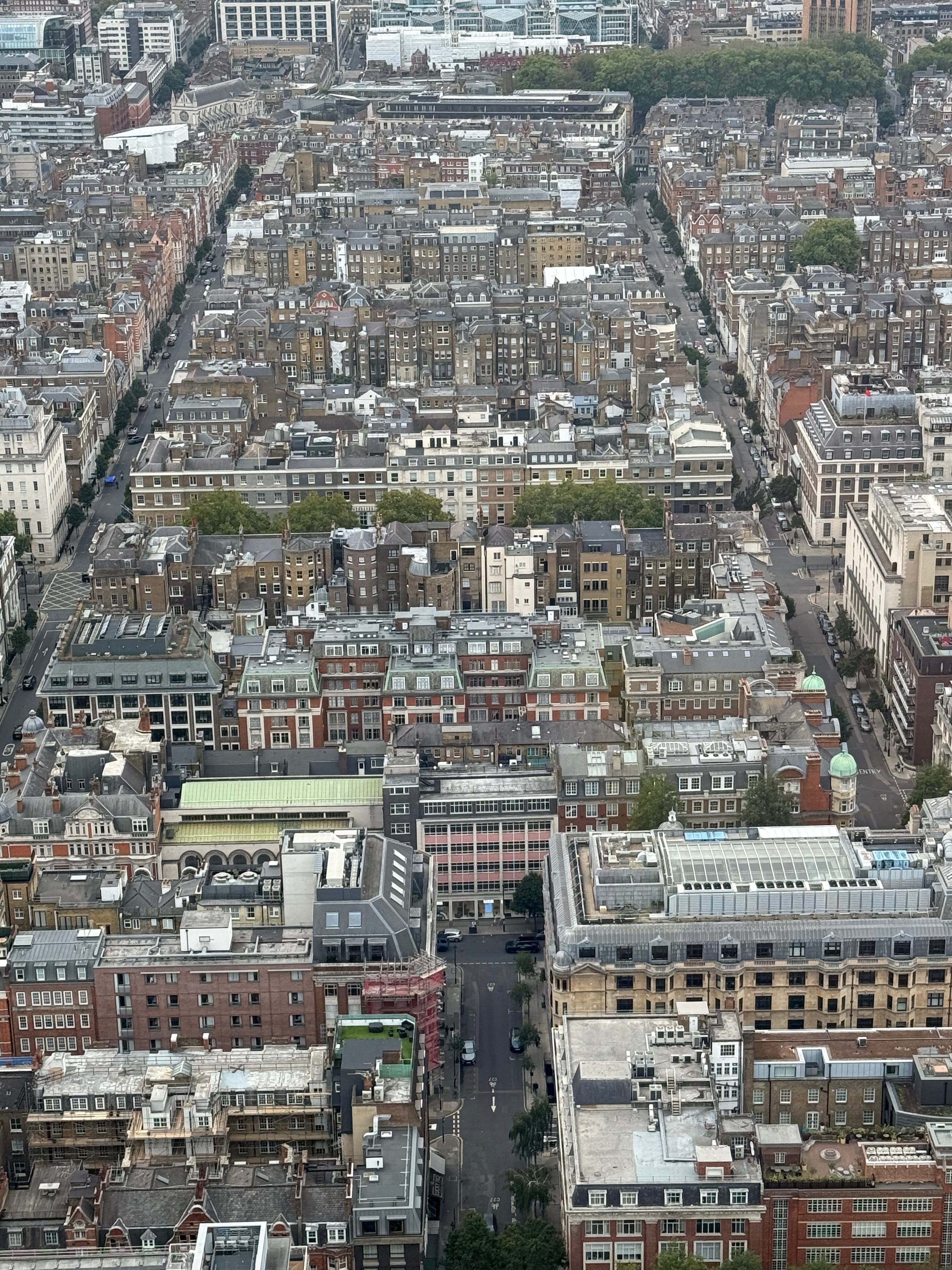
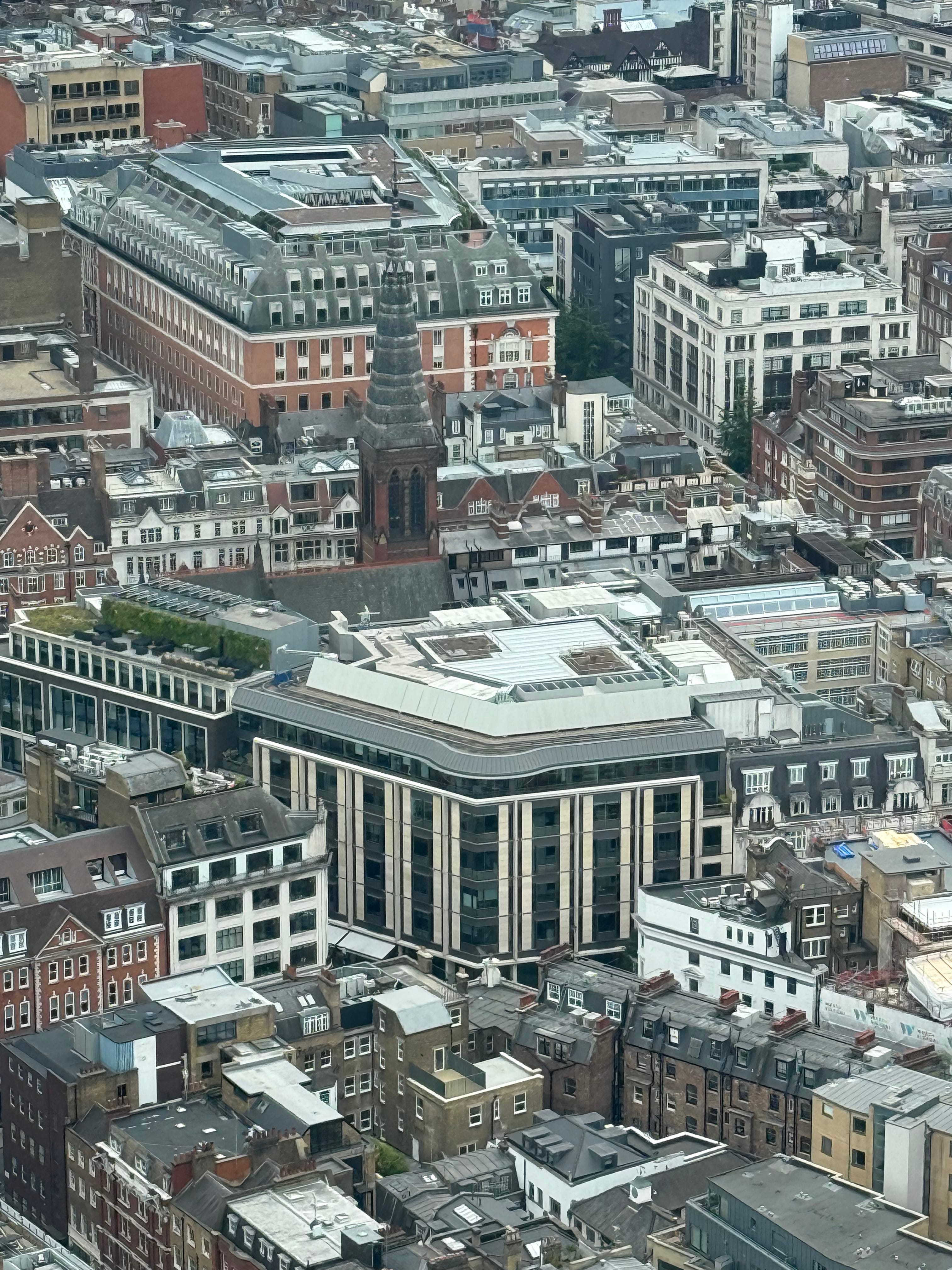
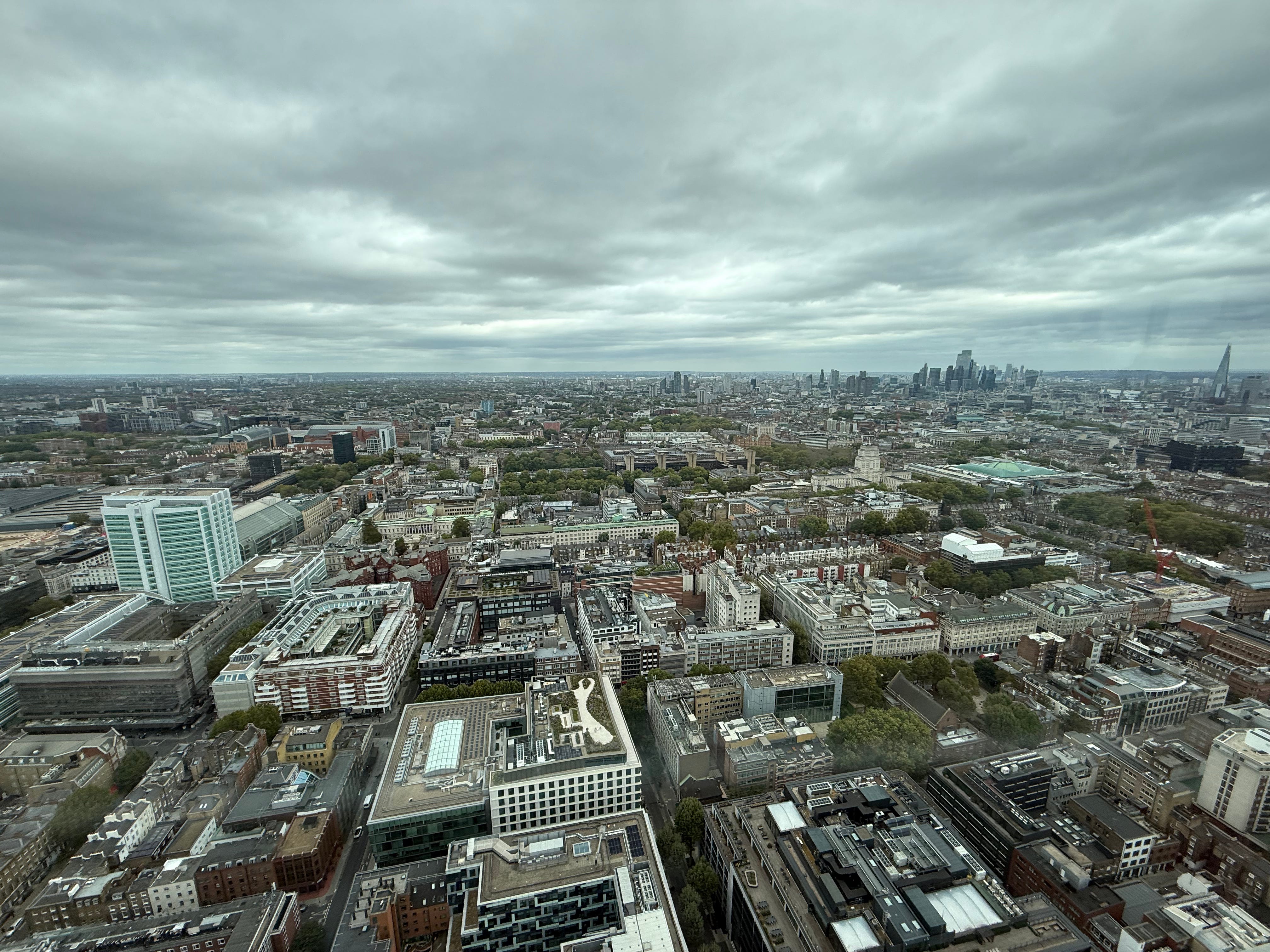
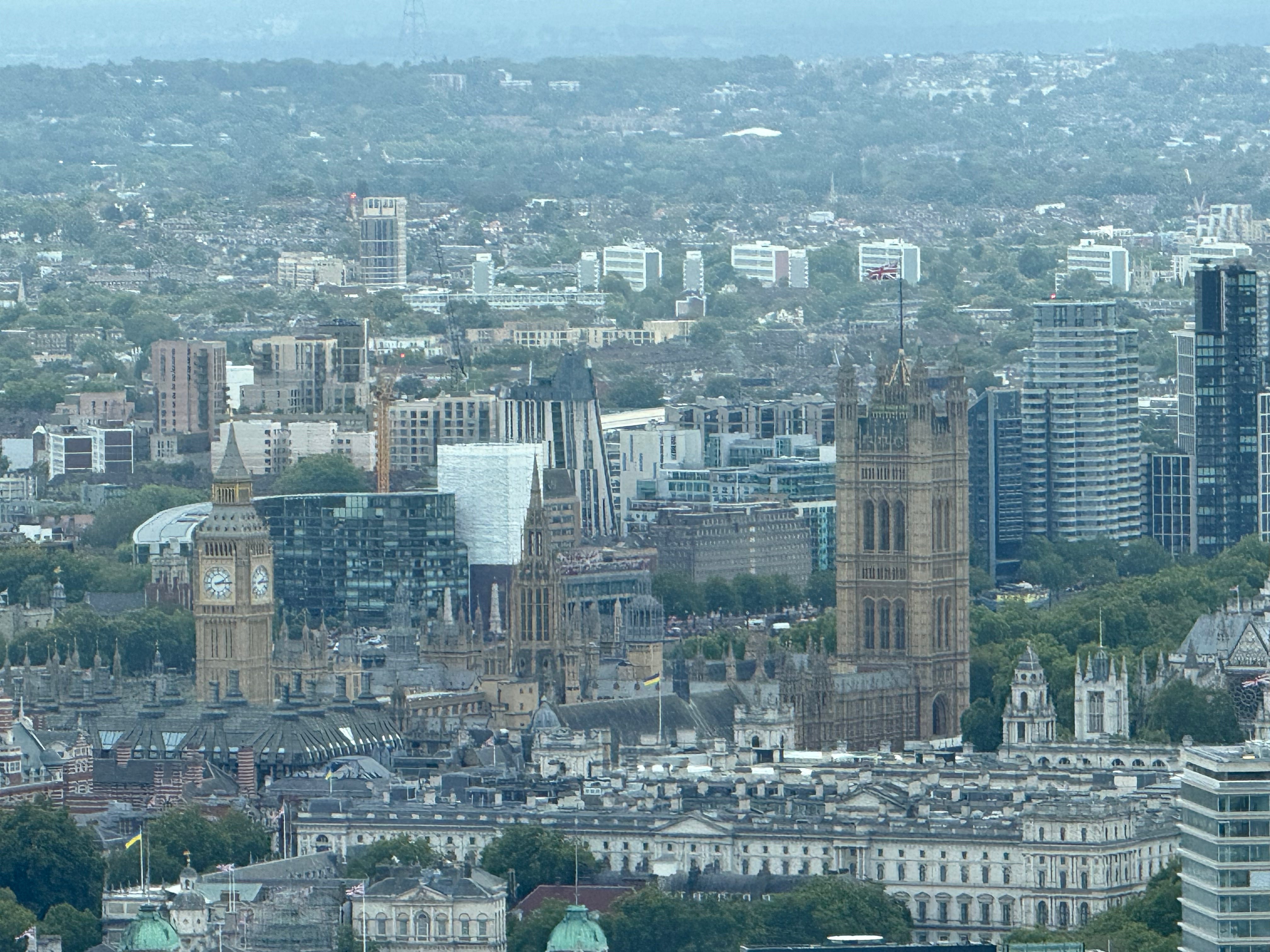
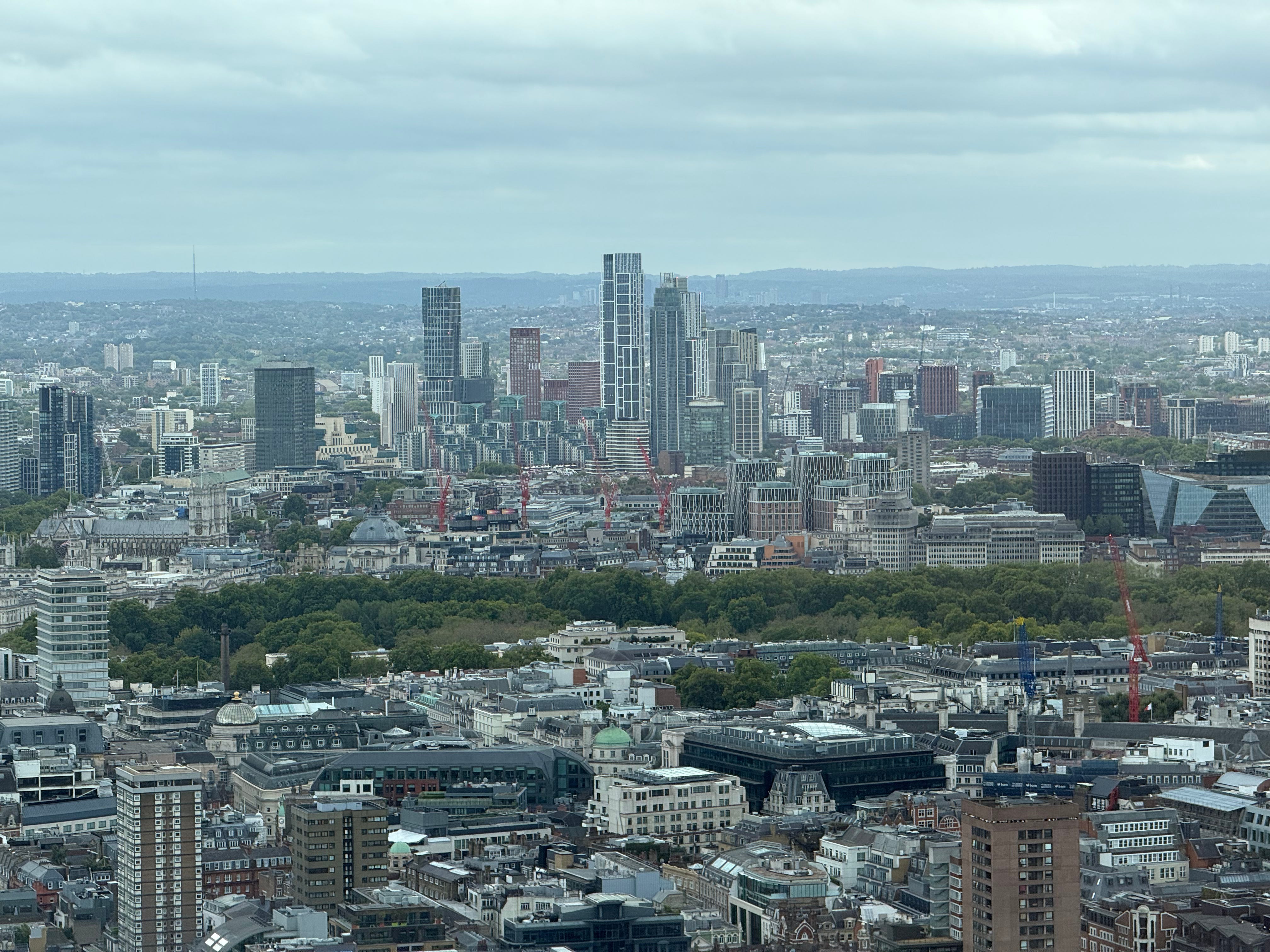
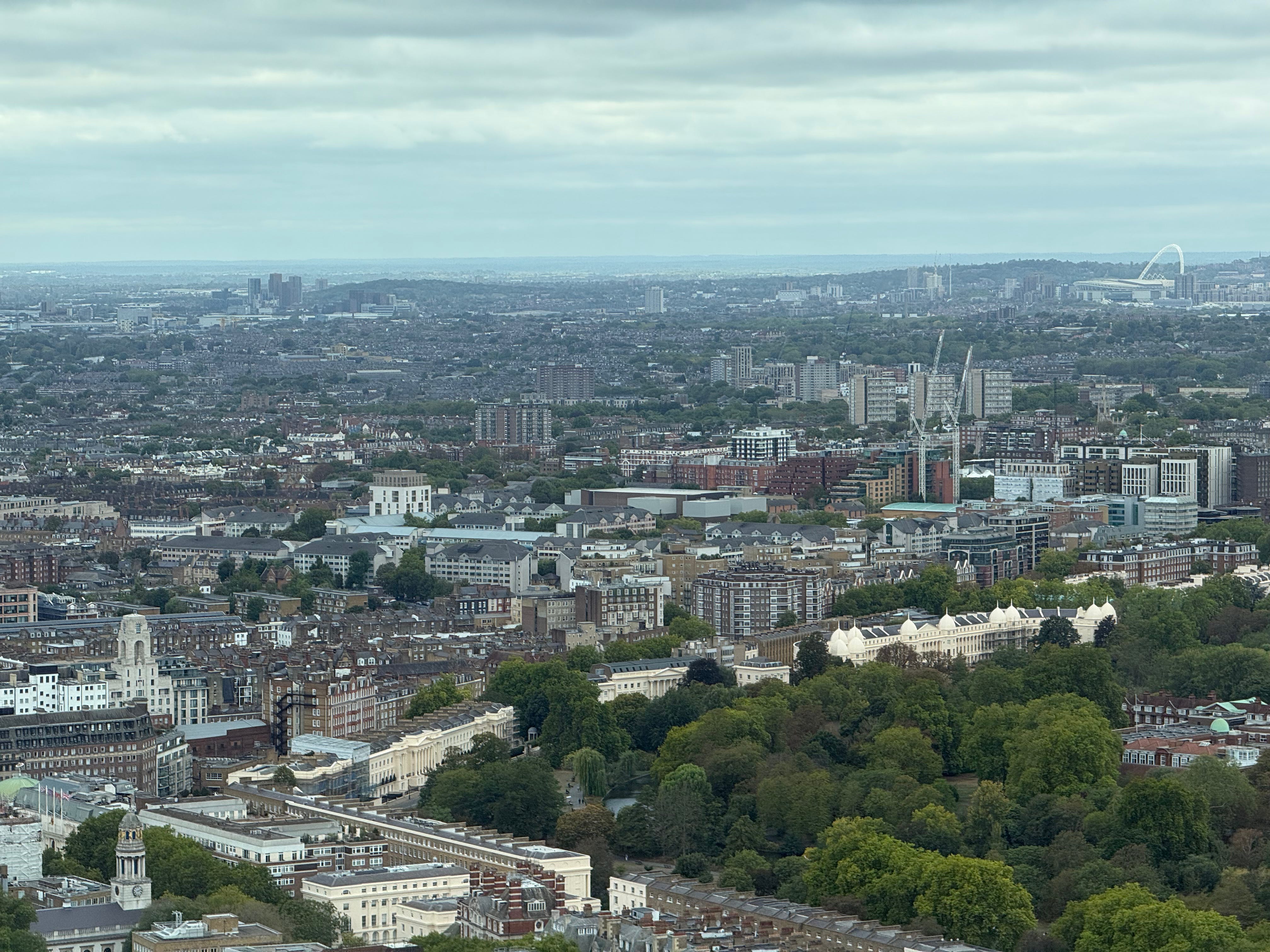
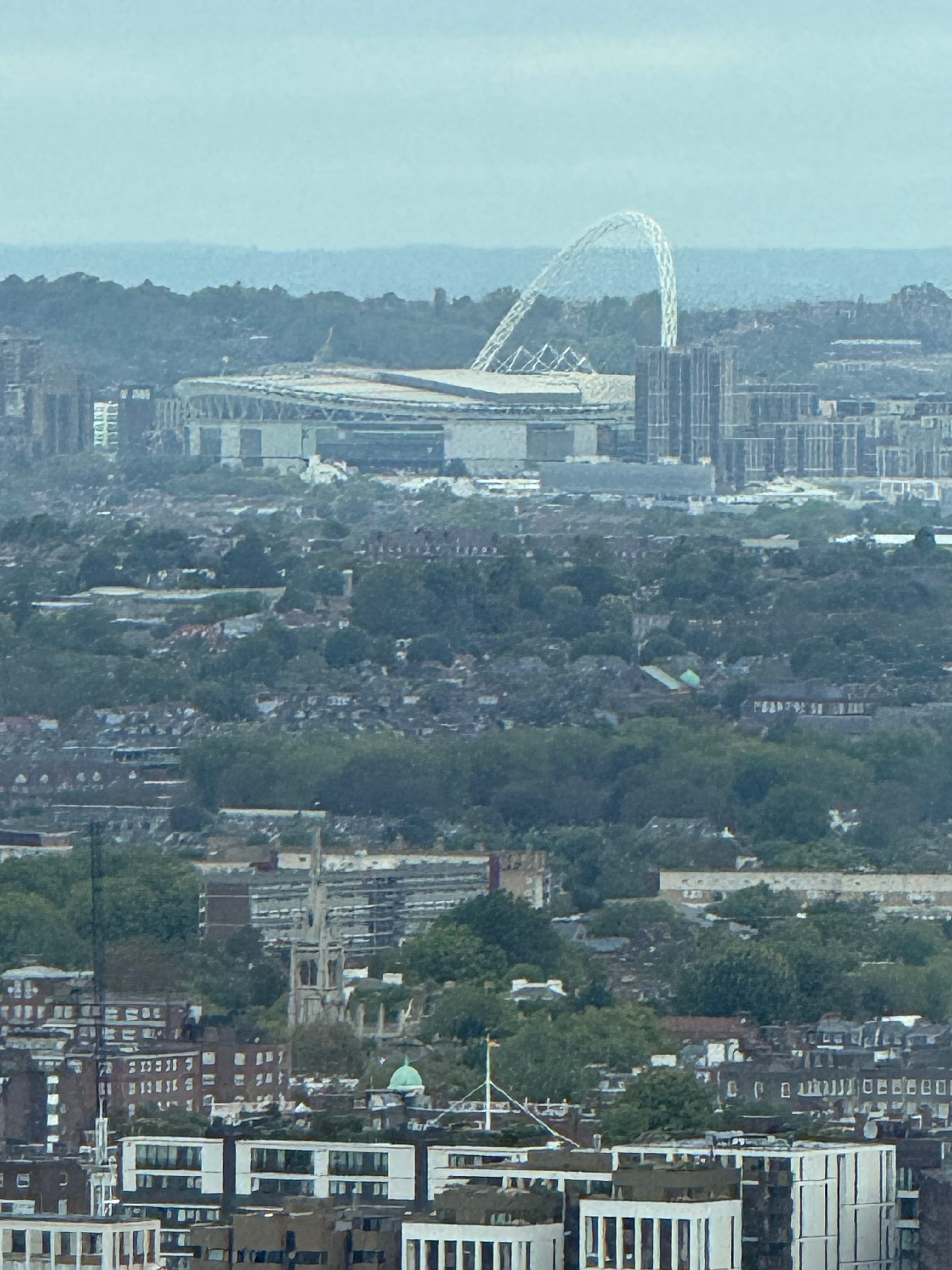
You could see far out - right up to Wembley Stadium and beyond. Apparently you can see as far as the South Downs on a clear day, which I didn’t appreciate at the time is all the way to the Sussex coast. Visibility for us was reasonable.
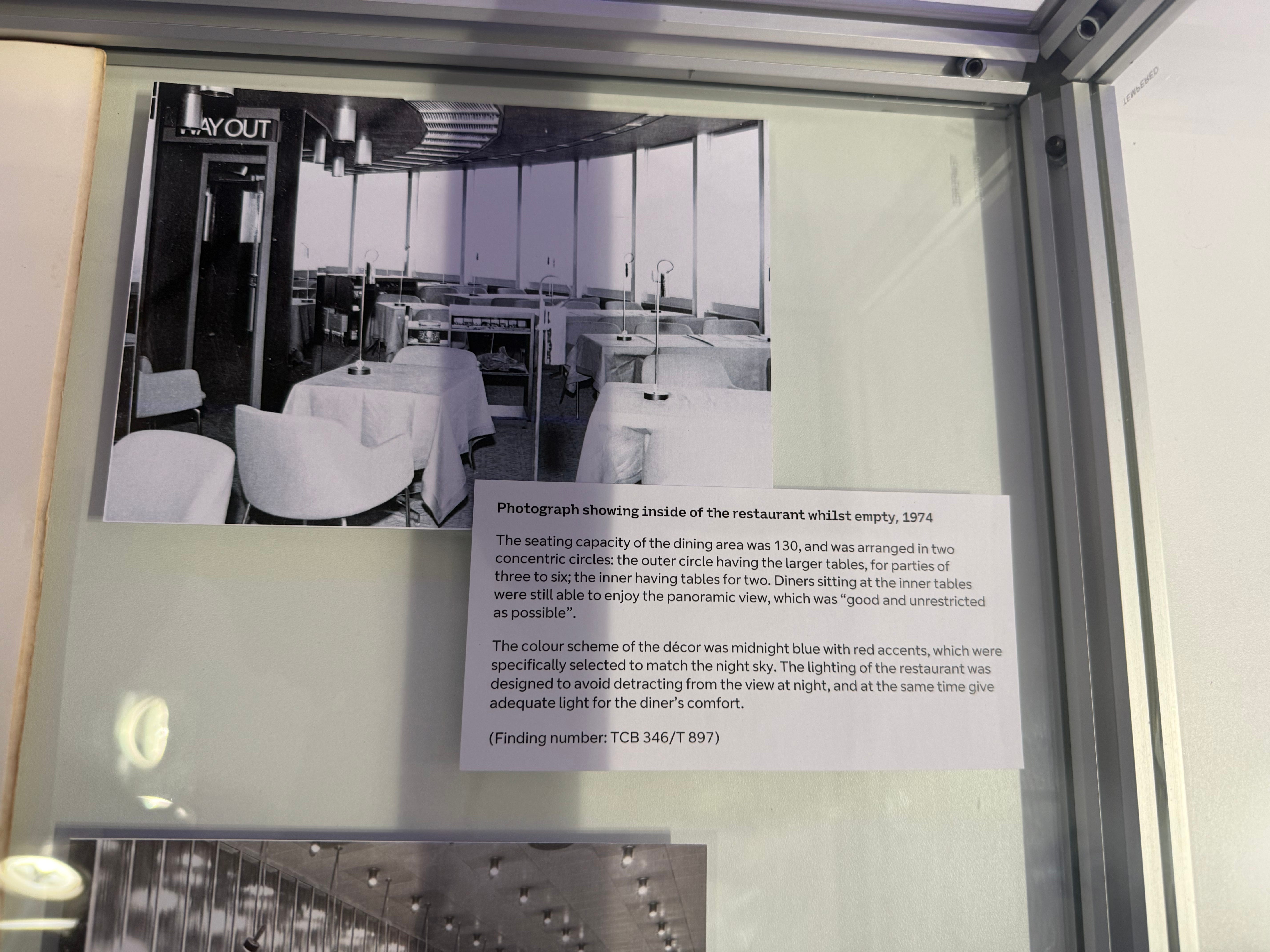
There were some Open House volunteers around who were very helpful, but as outsiders, only had limited information. I was most curious to see how much space there would be for diners. Apparently in its public days, it could hold 130 people, but now it has space for 8 round tables of 10. Whilst closed to the public, BT host several functions there a week.
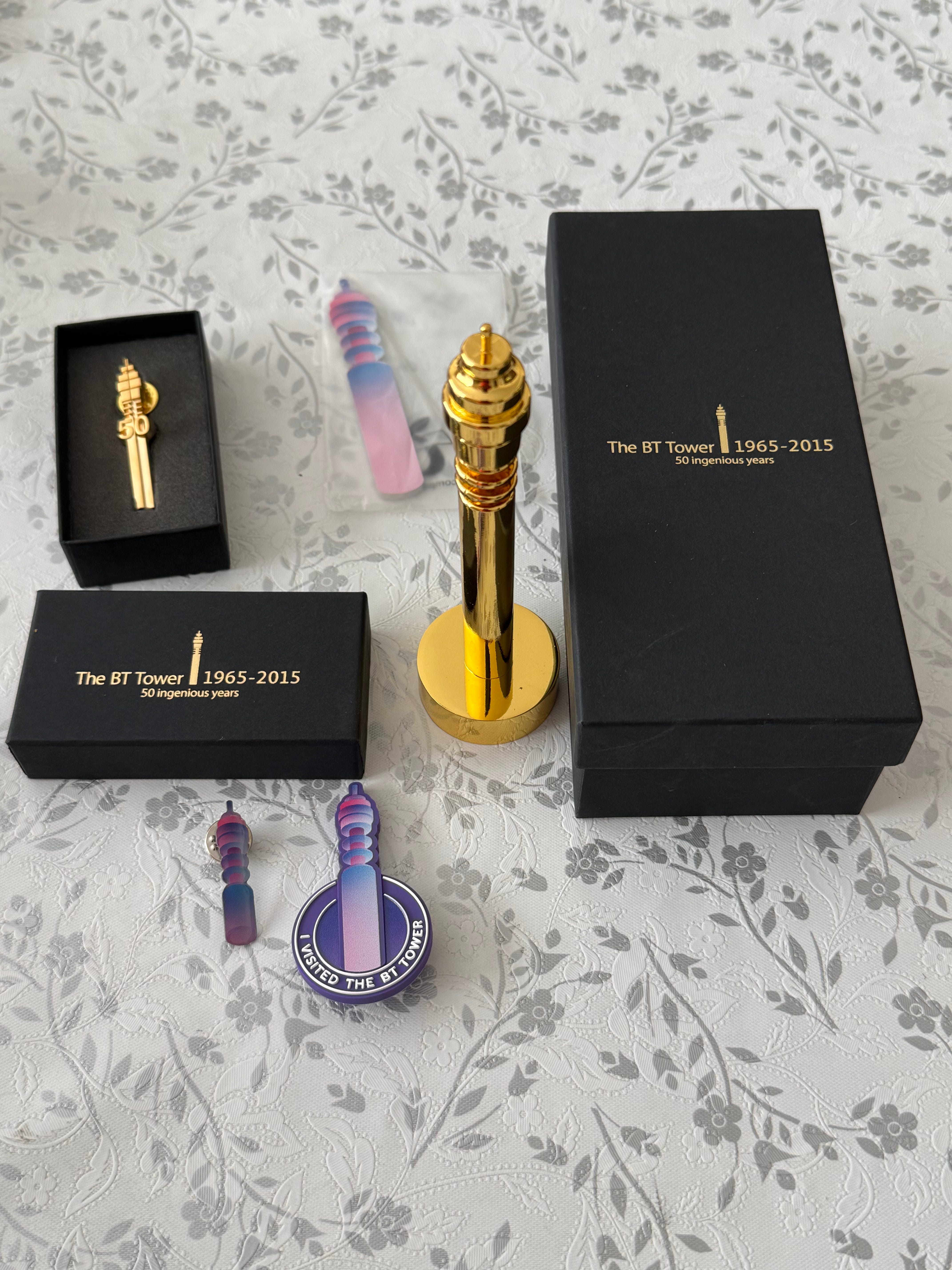
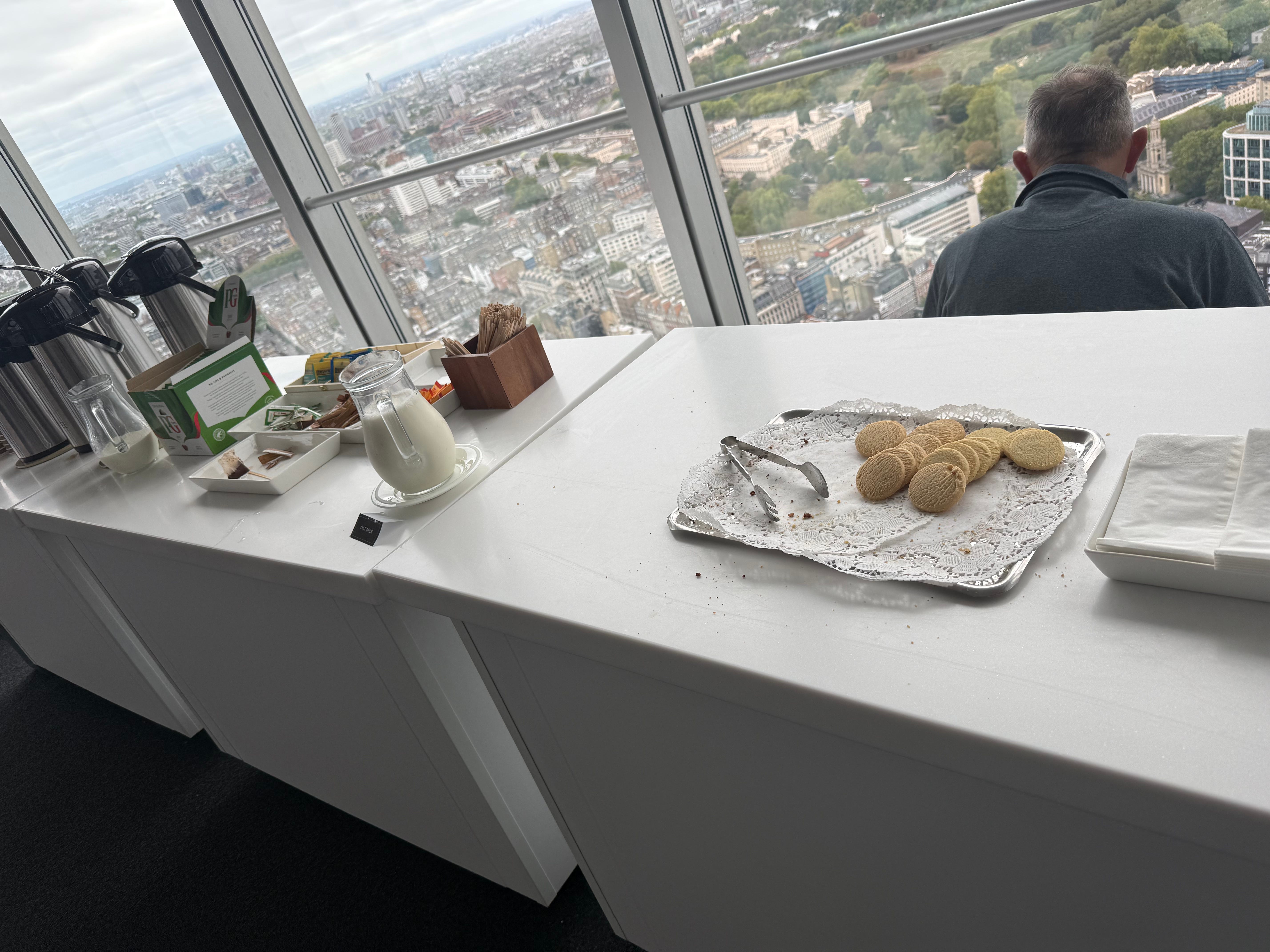
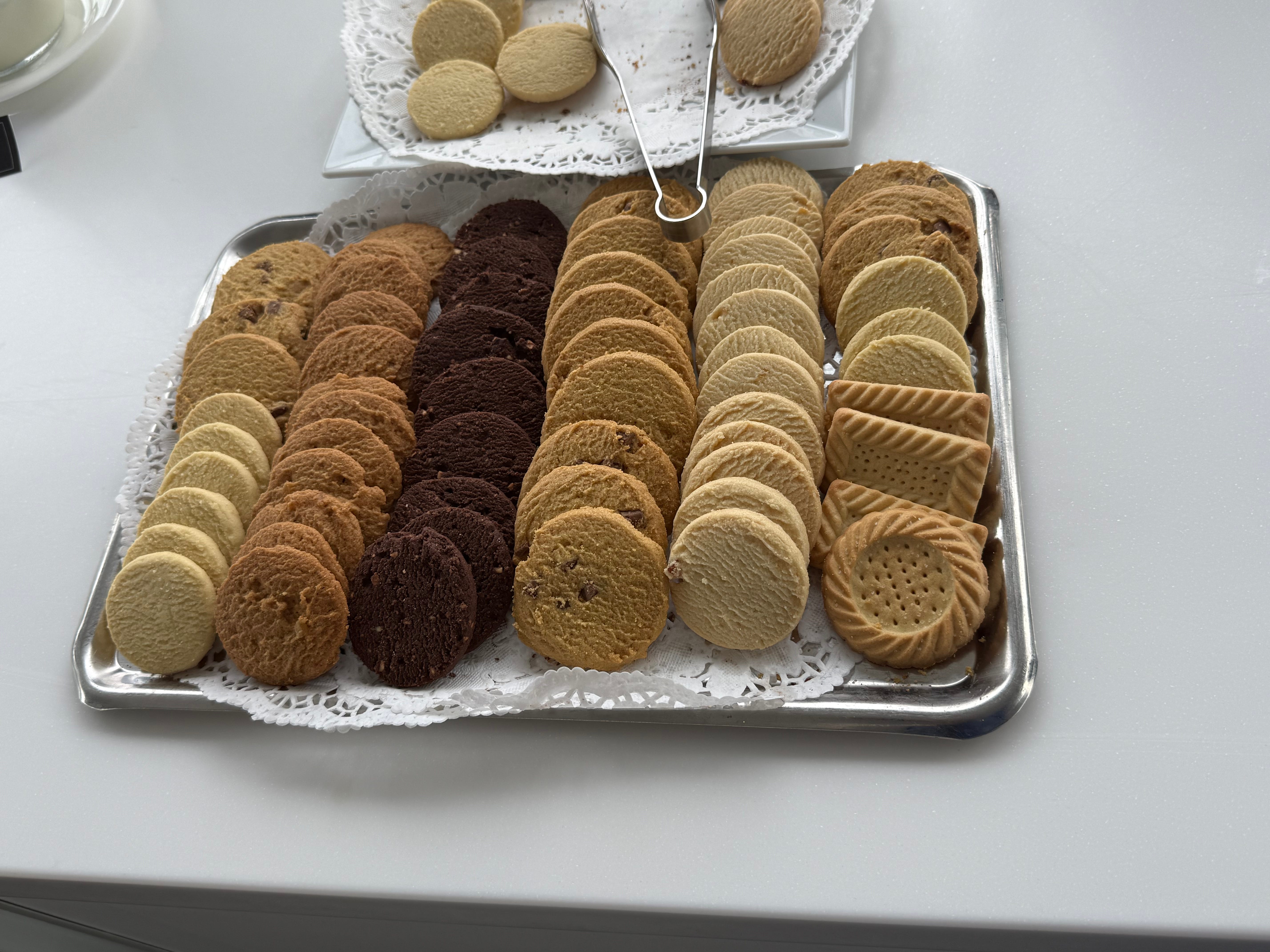
There were two stations offering free refreshments - soft drinks, tea and coffee, biscuits. I wasn’t expecting that. I’m normally self-sufficient, but it’s a nice touch. I continued moving around - I wanted to do a quick loop in case there was a star attraction or queue for anything - just to get my bearings and a feel for the entire thing. And then I spotted it…..a merch table! Love a bit of merch. It was crewed by someone from the tower, so I was able to ask more questions whilst grabbing a few mementoes. I got a fridge magnet, three badges and a small model. I collect fridge magnets (a bit belatedly because my fridge has a non-magnetic panel so it’s not a comprehensive collection of all my travels), I have a little display for things like the model. I’m a huge badge enthusiast, although these have limited value outside of here. I put a badge on immediately, and for the rest of the visit I was the coolest guy in the room, before packing them away for good (or until my next trip). It was also exceptionally reasonably priced - £12.50 for the lot. Giving us handouts, refreshments and some merch meant a lot - it showed that they were really engaged with the visitors to maximise our experience.
In the queue, I read that it was acquired by a hotel group in 2024. Apparently they were told there would be no events after March this year, but they extended that until next March, allowing for this event to go ahead, although it’s likely this will be the last. The proprietor is keen to keep the floor running, but being keen in principle and the practicalities and budget mean nothing is guaranteed, and I was pleased that I was able to get in before the opportunity was lost.
From the top of the tower, people on the ground looked like ants to us, and from their position looking up, we look like restaur ants. With ultrazoom found on modern phones, I was able to fill the frame with people on the street. Such observation towers would be useful for spies to snoop from a distance.
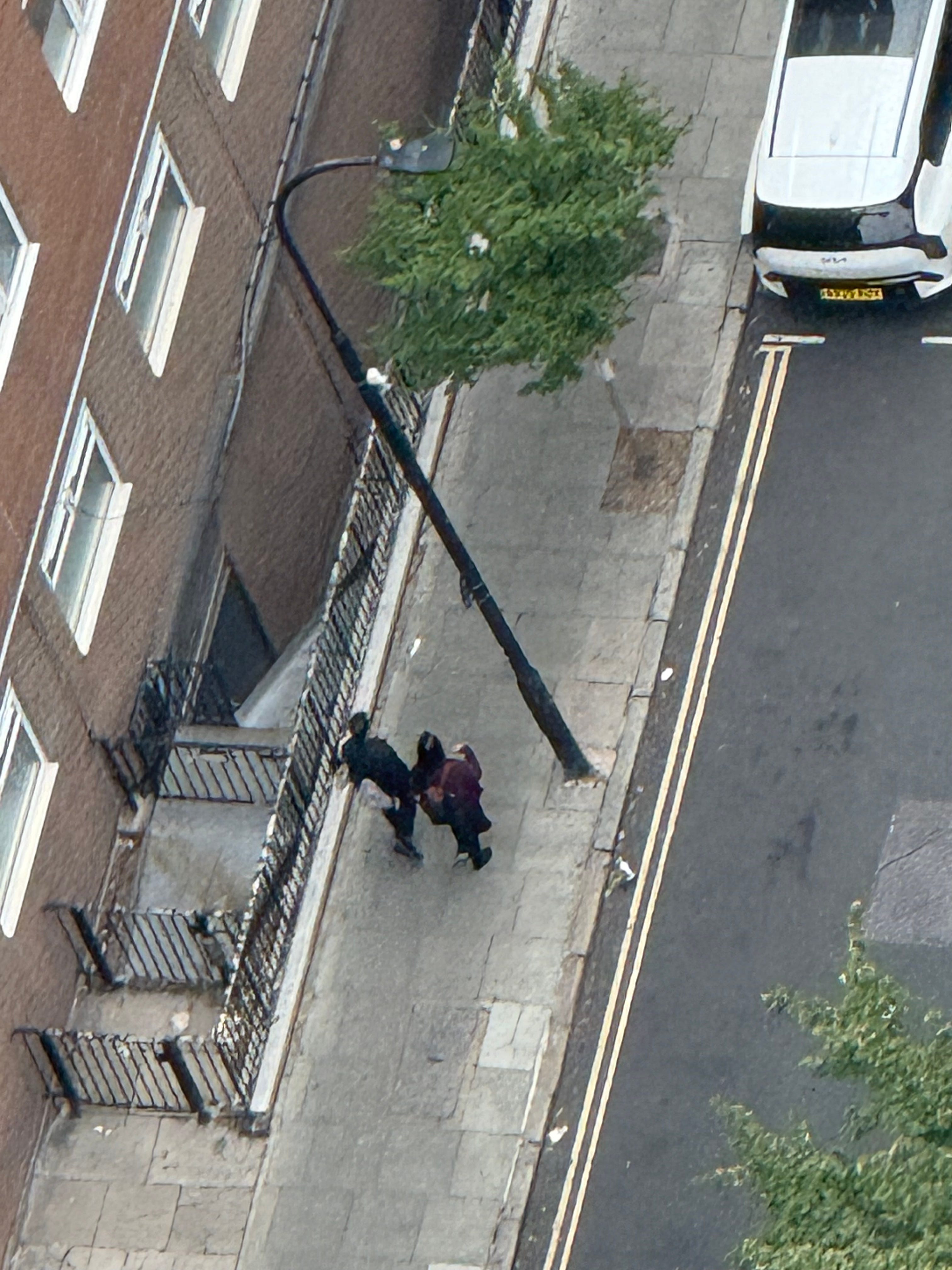
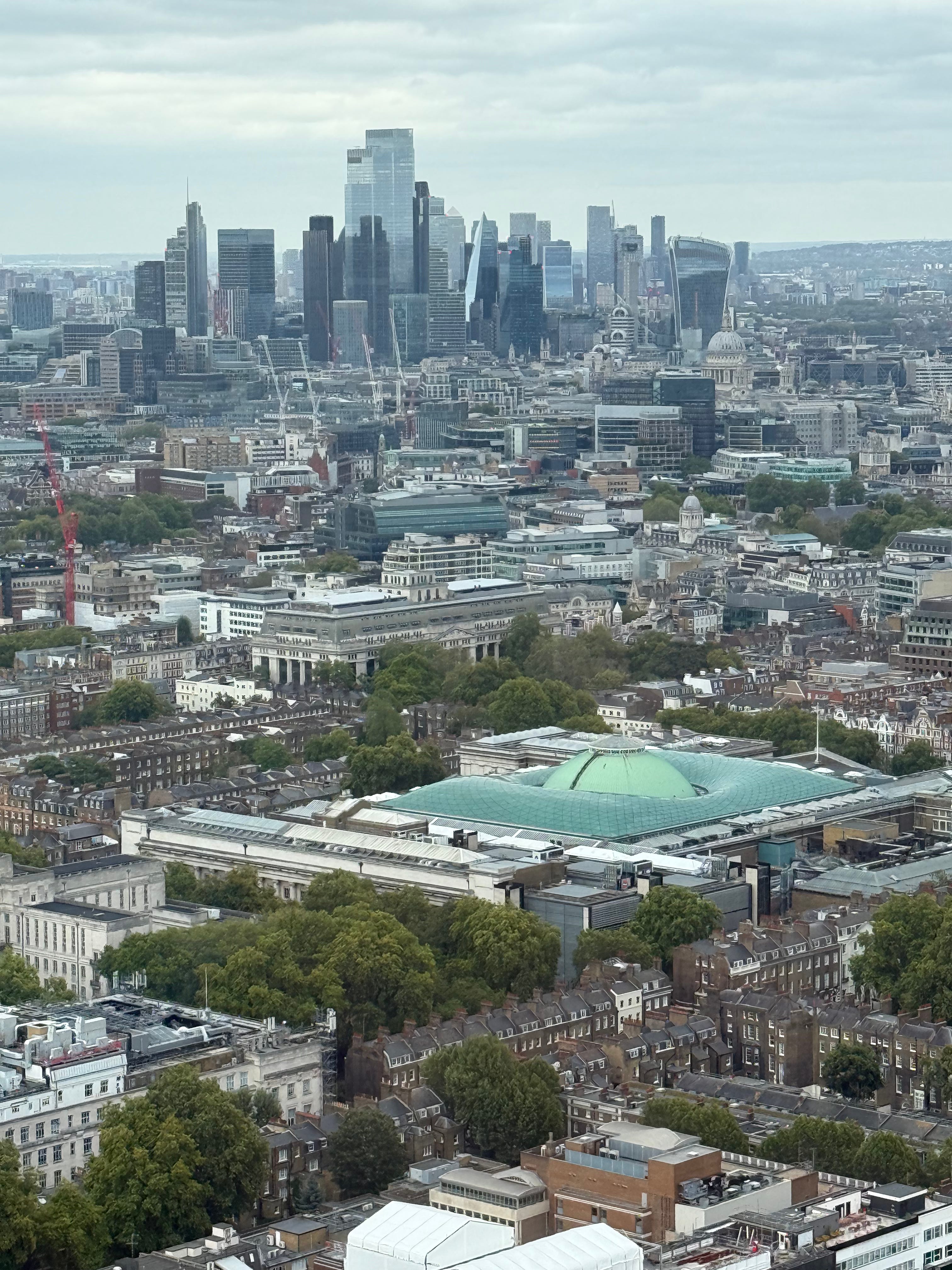
They were calling people back down - I was number 96 and they asked for 1 to 30 to return. I did speak to them and they said they’re flexible - there’s no fixed end time. I really wanted to absorb what I was seeing, the finer elements. I did a few slow loops, taking in each area. One of the most striking was the Square Mile, a monument to capitalism but also a visible cluster of tall buildings.
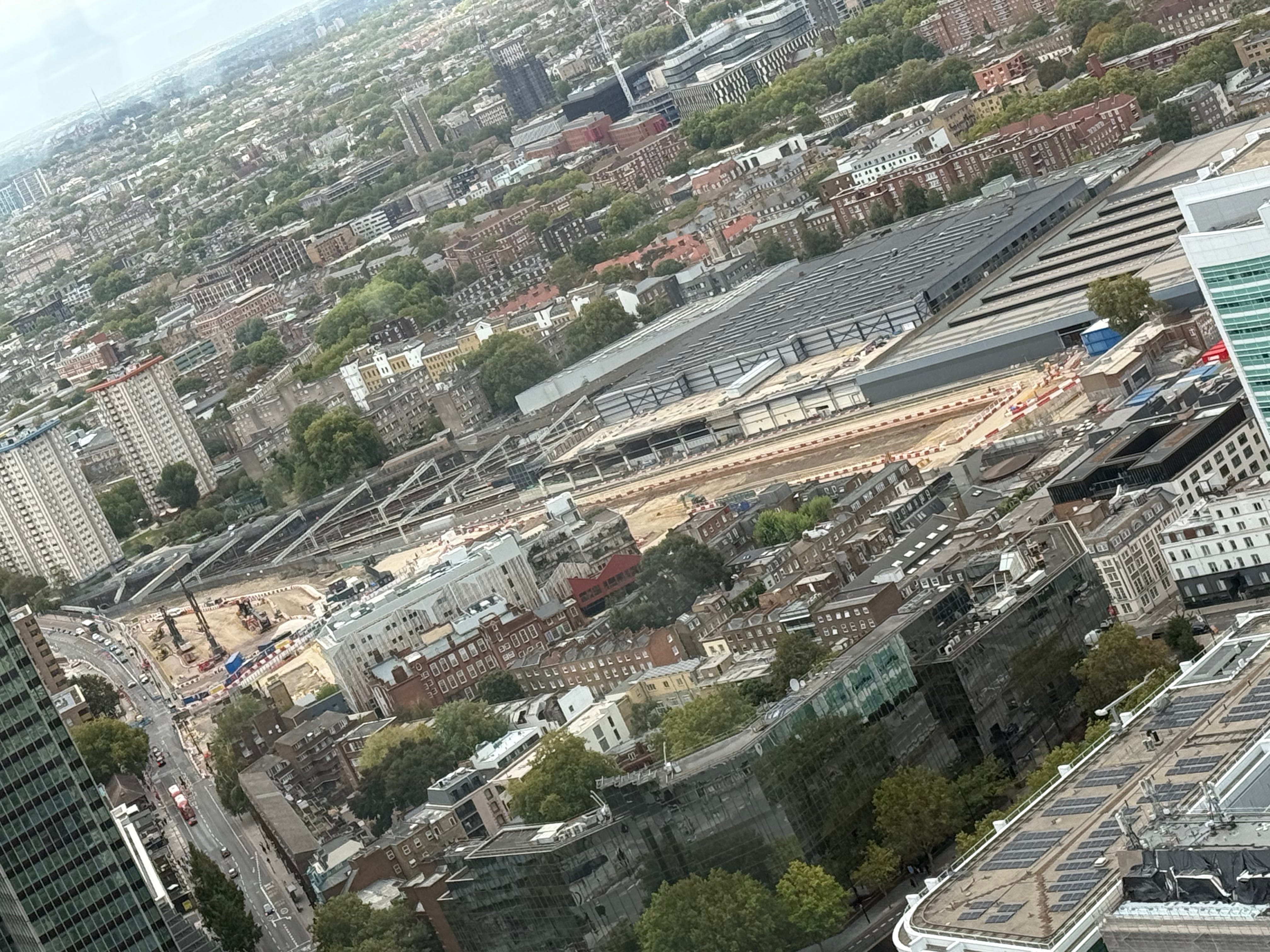
I was looking to see if there were vast tracts of forgotten land and I could snap up for a bargain price to develop my mansion.
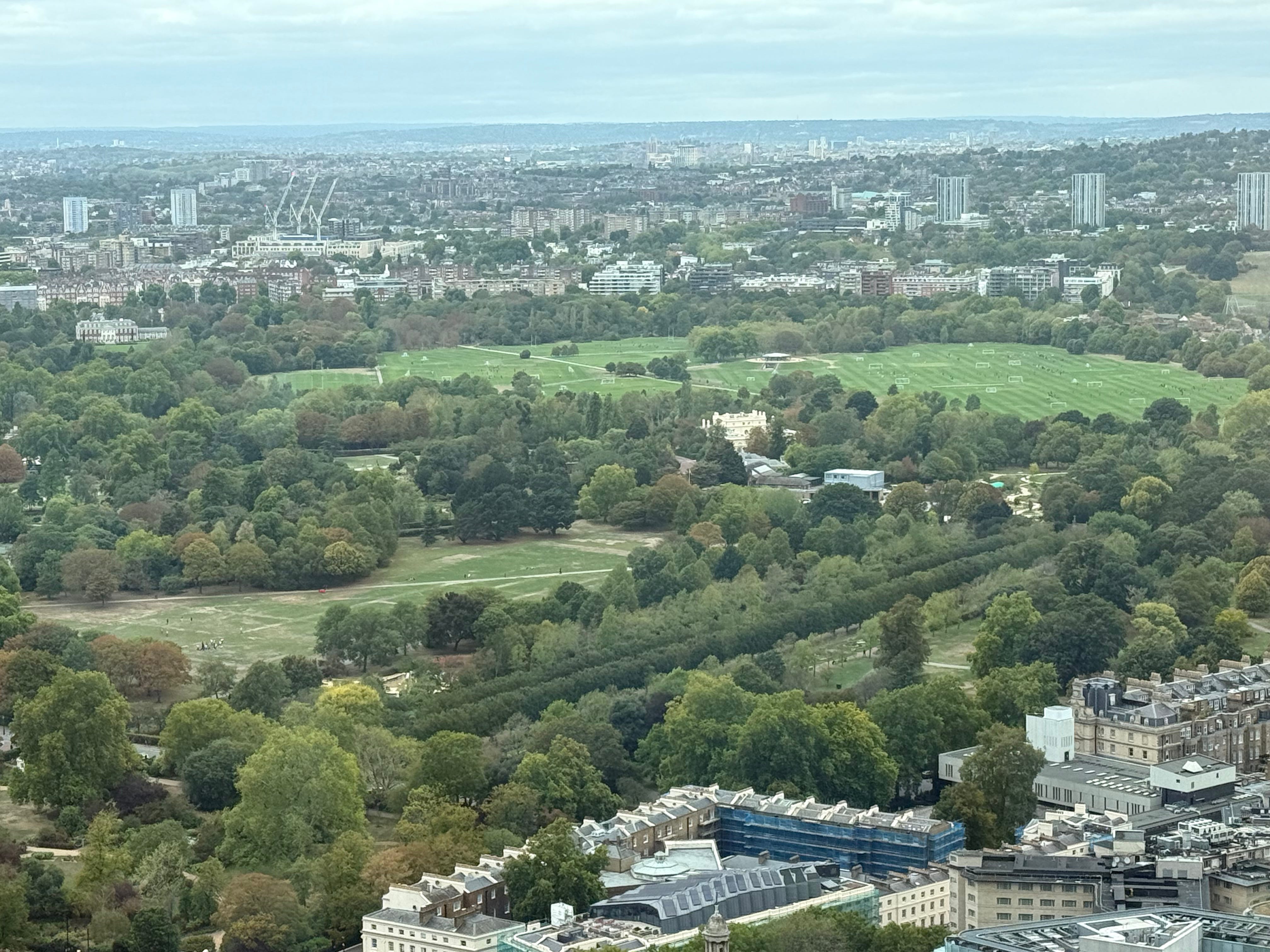
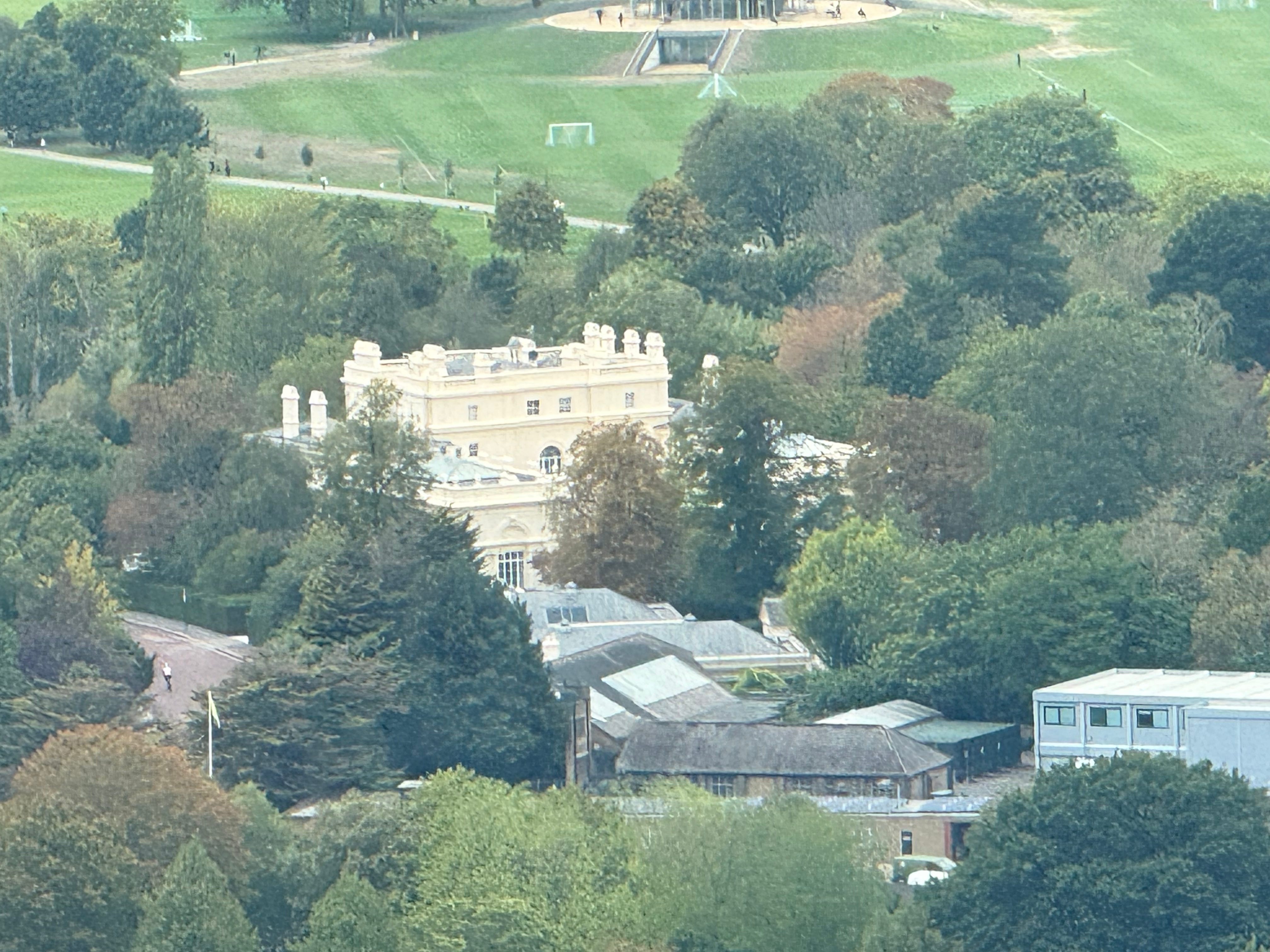
One mansion was particularly prominent - the US ambassador’s residence in Regents Park. Many years ago, when I got into photography, I was doing some urban architecture by night. I was travelling a lot to Europe, and being a night owl, I’d roam the streets and snap scenes. One day, driving home past Hampstead, I stopped off and wandered around the Regents Park area. There I was, a young brown guy with a fancy camera, spotting a lovely isolated house in the Inner Circle. As I start clicking, two armed coppers reverse-Homer Simpson from the bushes and question me. I only learned about the resident after I got home and searched it. They weren’t difficult with me, they were just asking what I was doing - and in hindsight, whilst it was an innocent excursion (which they quickly accepted), it must’ve been a bit weird, and I feel I at least brought some joy and excitement to their otherwise dreary shift. Seeing it from this angle showed just how isolated it is inside a huge central park.
I felt my time was nearly up, but I had a belated idea. I put my phone down at the base of a window and tried a timelapse video. It worked quite well, so I thought I’d go for the full rotation, or at least as much as I can before the session ends. I put it down and began chatting to the lady running the merch stall about some more of its history. She was in the inner (fixed) segment and after a few minutes, the phone was out of view. I looked over to my left and beyond, but couldn’t see it. A slight bit of panic - I shouldn’t really have left it unattended in public. I’m stressing, and pulling out my other phone to trace it. She nods in the other direction and I see it where I left it, well 20º further round, but still in the same fixed position. I was fortunate enough to get the full rotation, which became the first TikTok video for this project.
 Tiktok failed to load.
Enable 3rd party cookies or use another browser
Back to ground
Once the video was complete, I returned to ground level. This time there was just myself and another visitor and the lift operator, so I was able to get another video of the light in the lift.
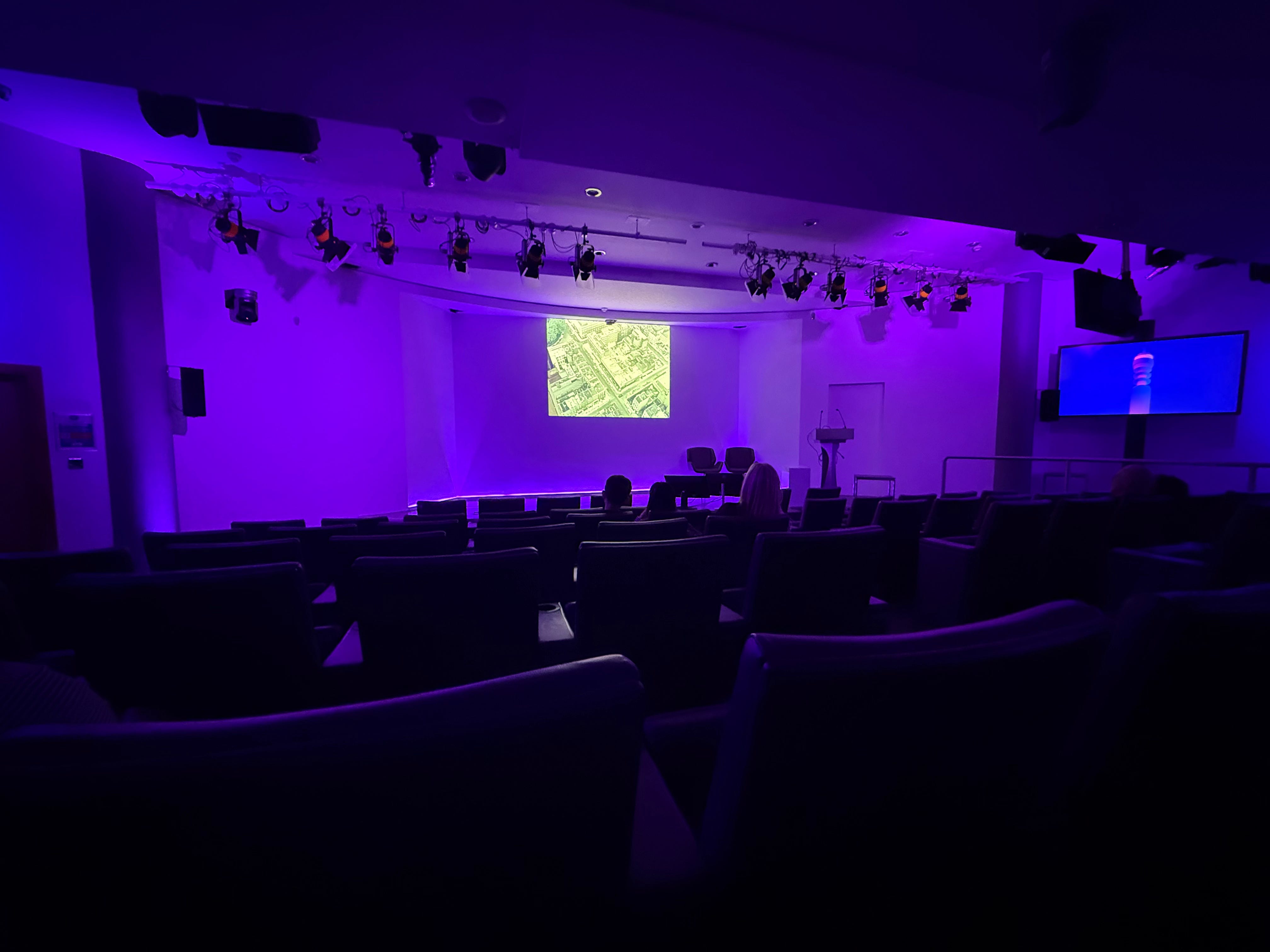
I took the time to see the rest of the display and artefacts, and then watched an 18 minute video on loop in the lecture room. There was a lot of good archive footage and information in here. Annoyingly, halfway through, a pair entered and talked at normal conversational level. I get that you think your experience has finished, but show some decorum and hush it until you’ve left, or at least make some effort to whisper.
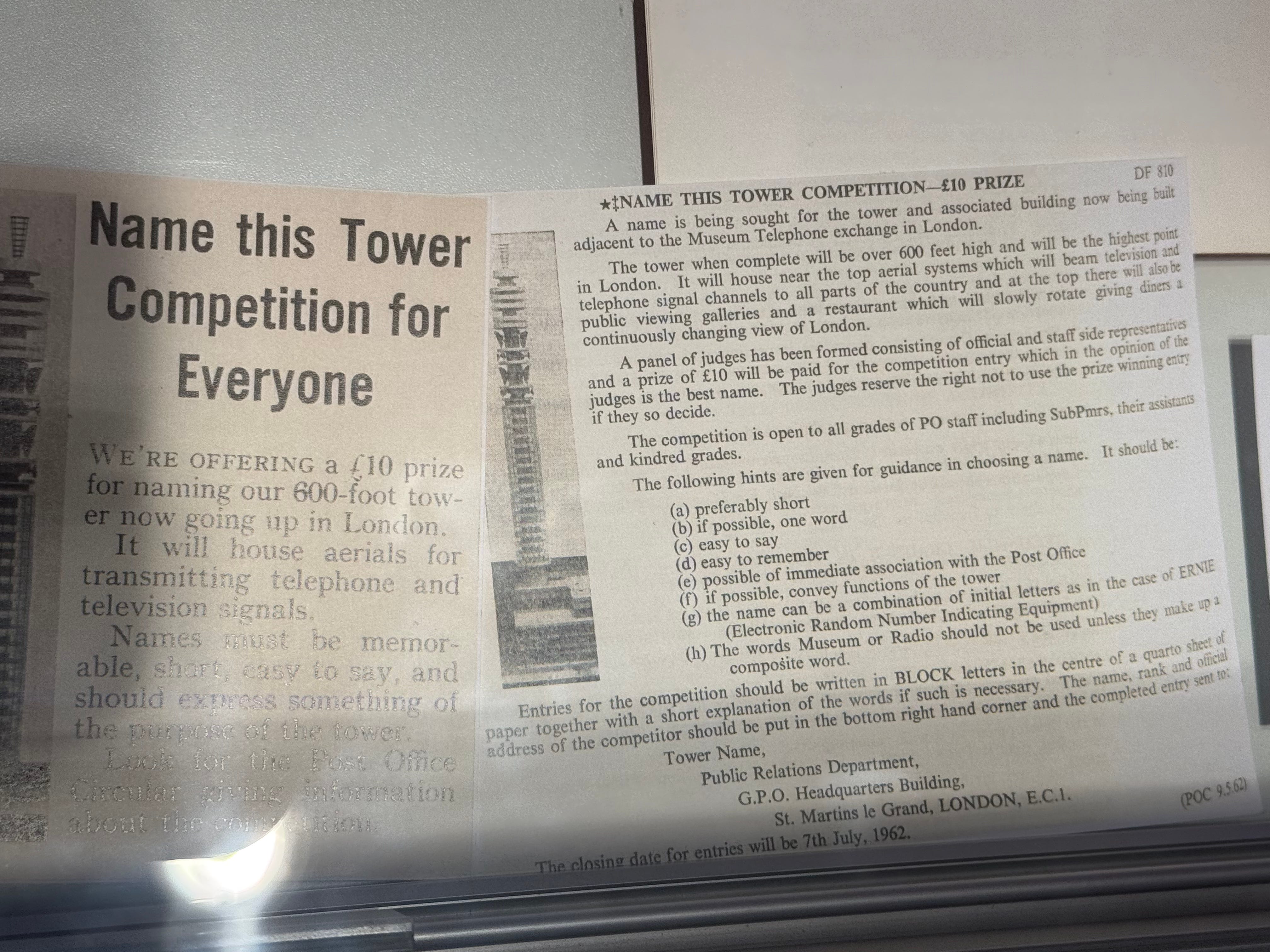
They had the original menu, and they had details about the competition to name the tower. There were some great suggestions - PORTAL (Post Office Radio Tower At London), Teltower and Telspire. The Postmaster General at the time of the competition (1962/3) was Reginald Bevins and he rejected these in favour of Post Office Tower, the worst of all options. BT was in existence then, but it was the Post Office that dealt with comms of this manner, hence the name. I always found that a bit weird, because I’ve only know Post Offices to sell stamps and hand out driving licence forms etc. When BT did take over comms, it was known as Telecom Tower until 1991 when it changed names again to the current one.
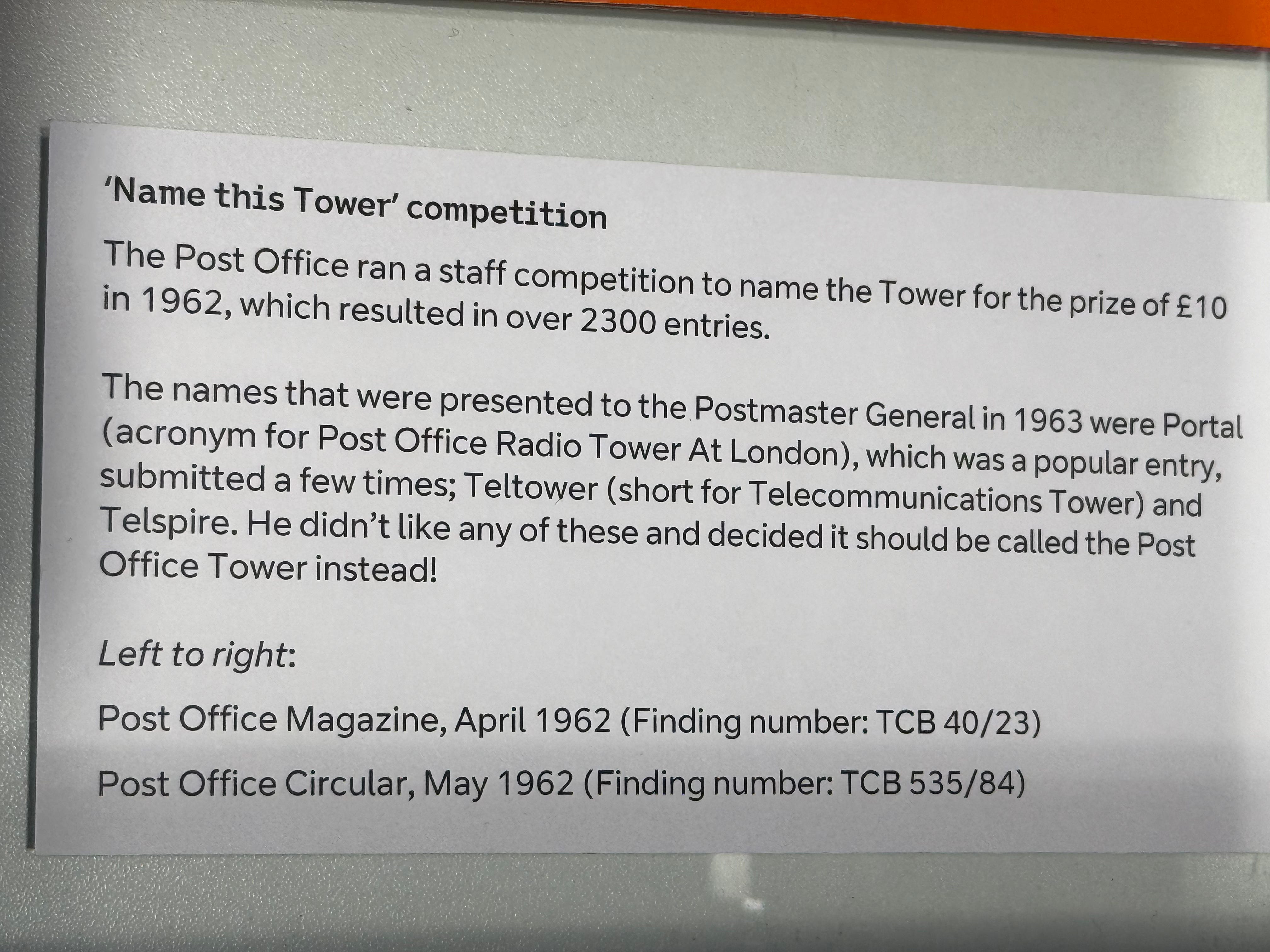
The Tower cost £2.9m to build and £6.1m to kit out. I’d always assumed the tower was predominantly offices, that it was BT’s corporate HQ, and that the restaurant was the staff canteen. Staff had a separate canteen, and the building was predominantly filled with telecoms equipment. Central London was selected because whilst land was more valuable, the cost to tunnel cables to a suburban hub would’ve been too much. I was thinking of the foundations before I went, and they showed a graphic of just how deep and wide they were - greater than I expected. To counteract sway, they built a bridge deck from the adjoining Museum Telephone Exchange on the 9th floor to collar the tower. This must be the famous Tower-Bridge in London I’m always hearing about. I’m always impressed by the engineering that goes into such structures, especially novel and creative fixes to issues that arise, and the confidence that it will remain stable and safe.
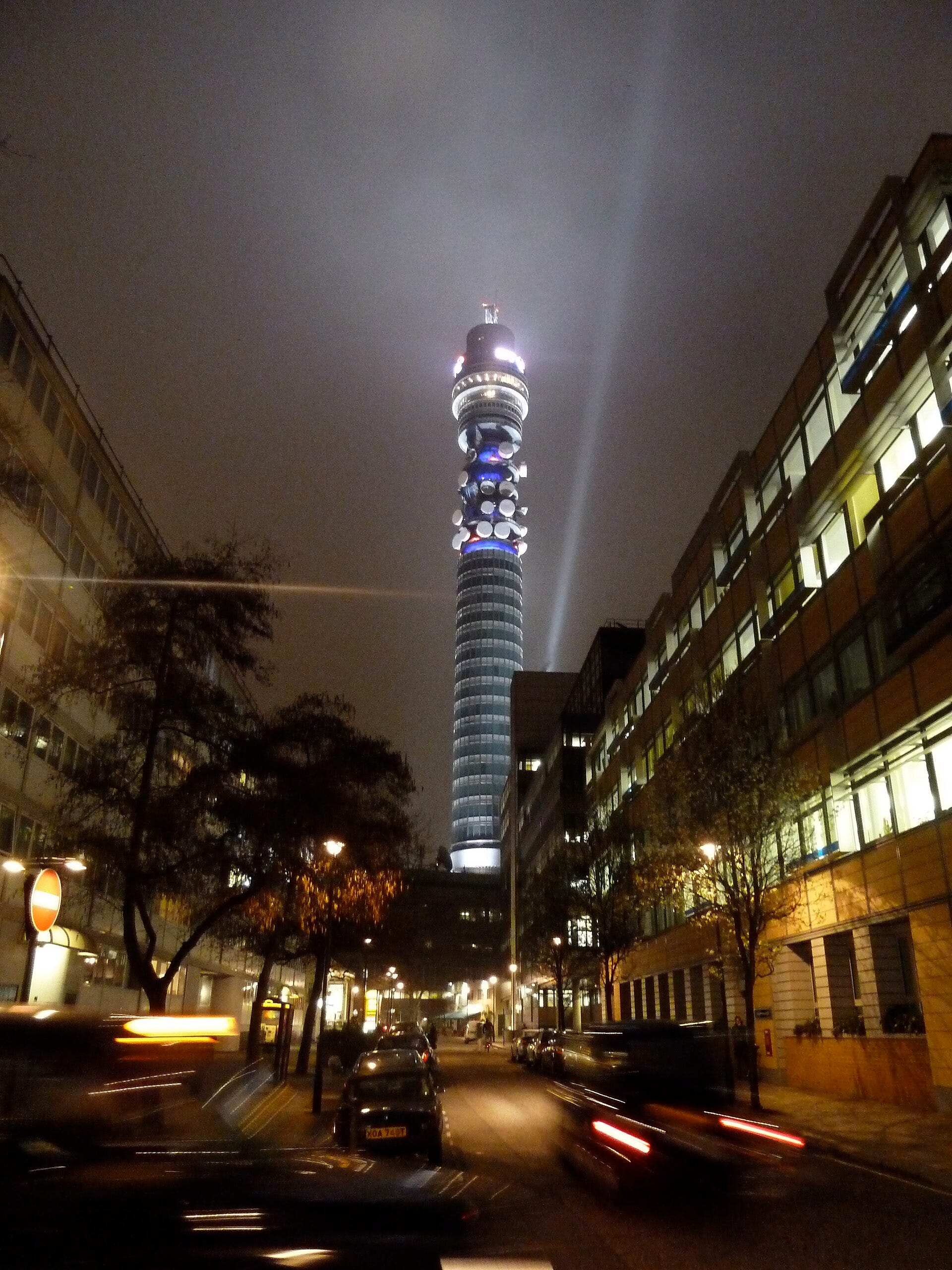
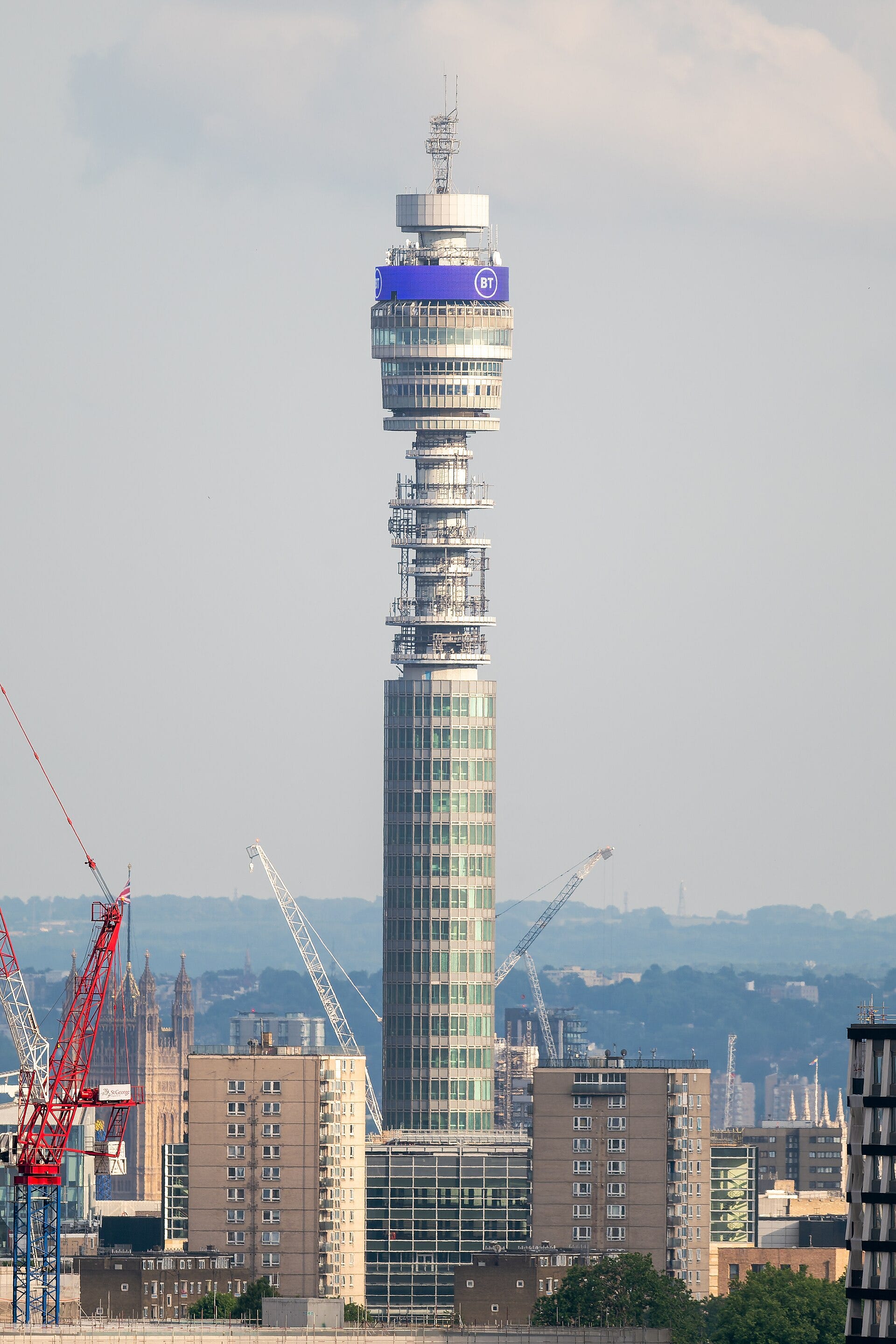
One significant change is that all the dishes that covered the segment below the rotating levels (seen here in 2011) have been removed now - compare to the 2025 image
I left with one less top-tier fact in my arsenal, but had a thoroughly fun time and a deluxe experience - far better than anticipated, with lots of bonuses and extras. I appreciate the efforts of staff, volunteers and the organisation, and am grateful I got the chance to visit before the next stage in the tower’s history.