Intro
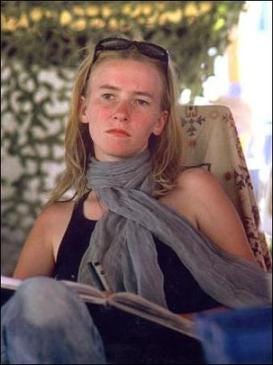
My Name Is Rachel Corrie was first staged by Alan Rickman in 2005. It tells the story of an American activist who travelled to Gaza in 2003 on a humanitarian trip. It played at Royal Court Theatre, but its transfer to Off-Broadway was blocked. Alan Rickman said “This is censorship born out of fear, and the New York Theatre Workshop, the Royal Court, New York audiences – all of us are the losers.” It did find a home in NYC later in 2006 for a run. There have been subsequent productions since, including at Fringe and one earlier this year in Manchester.
This production was at Greenwich Theatre, directed by the in-house artistic director.
My background
I knew of her story, but not about this play. I didn’t know of the incident at the time, being lost in a haze of guitars in my student days and rather uninformed about current affairs. In fact, I was blissfully unaware of the history of the conflict until reading an article that showed land in the area since 1948. Having grown up at a school with significant focus on the Old Testament, I knew of the land of Israel from biblical times, and I would hear in the 90s during the inter-intifada era about skirmishes in the region, and it seemed like the state had been there throughout. After that article, I read deeply into the history right from struggles before the establishment of the state right through to the present day. I was horrified to learn about the conflicts and present status. It’s difficult to remain neutral and apathetic during such violent asymmetry. I was vocal about it for a while, but in recent years I’ve seen friends suffer the consequence of public advocacy. I feel like a coward for not speaking out more, but much of that is borne from despondency. A few tweets won’t move the needle. One thing I thought would be interesting is to attend a rally with a placard saying ‘I don’t support Palestine Inaction’ but I’m unsure whether fellow supporters would see it as a cop-out, and of the legalities of it (cop-in?). Unfortunately I’m not willing to risk the consequences of having an arrest on my record for making a statement, especially as I don’t support sledgehammering a cop, although I have no qualms with endorsing the destruction of an arms factory regardless of who they’re supplying. I almost made the national press with an incident related to a (non-violent) protest at another arms site (representing an interested third party in attendance) but I had to leave one of my team to make the statement as she had remit over the region it happened in. Further details in my autobiography.
Once I commit to a play, a show, an event, I limit my exposure. I want the story to reveal itself. You could read just the tagline or brief synopsis of a TV show e.g. mum adjusts to life in the seedy criminal underworld after her husband goes missing - but it opens with the husband, and you know how half the first episode will play out. All I knew about this play was it was put together from her diaries. I’d read a review about God’s Promise at Cockpit Theatre a few weeks before, and it said it was a little all over the place - stories presented in various ways, sometimes lacking coherent flow. In my mind, I pictured that My Name Is Rachel Corrie would similarly feature different scenes in different ways from a small ensemble cast. I was wrong - it was a one woman show, and told her story from her awakening through to the end.
I reminded myself of the facts of her mission and death before the play, so the grander details were known, just not the format or style in which it was presented.
The night of the play
I was being accompanied by a prolific blogger and event attendee I met earlier in the year. We’ve been to a few shows together - we have some overlapping interests and some diverging ones (most notably film) but sometimes the calendar stars will align and we’ll catch a show together. It’s nice to have a blog post to compare mine to - two different takes from adjacent seats.
It was our first time to Greenwich Theatre. It’s a bit out of the way for me, but I’m in no way averse to travelling there. A DLR is easy enough. I’d been to the area once before for Up The Creek’s Blackout comedy show. A few of my friends were in the area for The Strokes at the O2 but having seen them twice in the past decade, I’d had my fill.
It was in their smaller space, with free seating. I was waiting close enough to the door so when it opened, I was able to pick seats. Front centre. When I’m in a poor seat with a compromised view at a big West End theatre, I tell myself that soon enough I’ll be in a small theatre with choice of seats and proximity.
There wasn’t a (printed) programme, but there was a flyer, and I scanned the QR code for the brief digital version.
The play
SPOILERS:
She was sitting on the bed, already in character, silent. A young American woman living a simple life, a little unburdened by troubles half a world away.
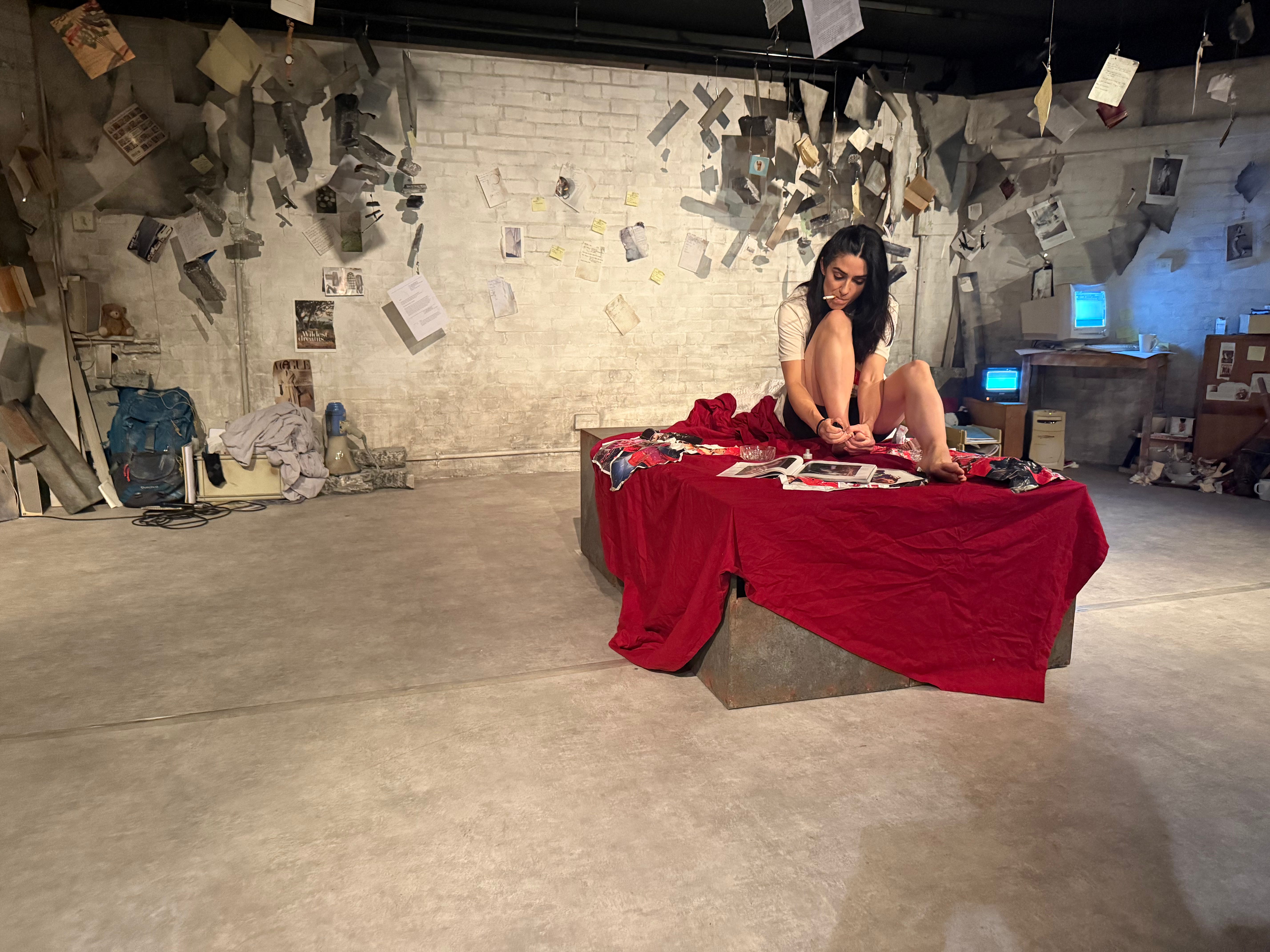
It was almost ten minutes before it opened. Rachel - played by Cassie Bradley - was talking about life in Washington state. She talked about second grade, with rules on the wall. The only one she remembered, and wrote on the wall of the set, was ‘Everyone must feel safe’. It was at this point I felt the connection between her motivation and that of another outspoken advocate for the oppressed - Ms Rachel the children’s entertainer, whose advocacy for safety and security of kids has brought her into criticism because apparently that is controversial.
The build-up was quite protracted, although fitting. It painted a picture of who Rachel was and what her life was like at the time, and influential elements of her life up to that point that informed her worldview. It was over 30 minutes, closer to 40 perhaps out of the 90 minute show until she arrived in Gaza.
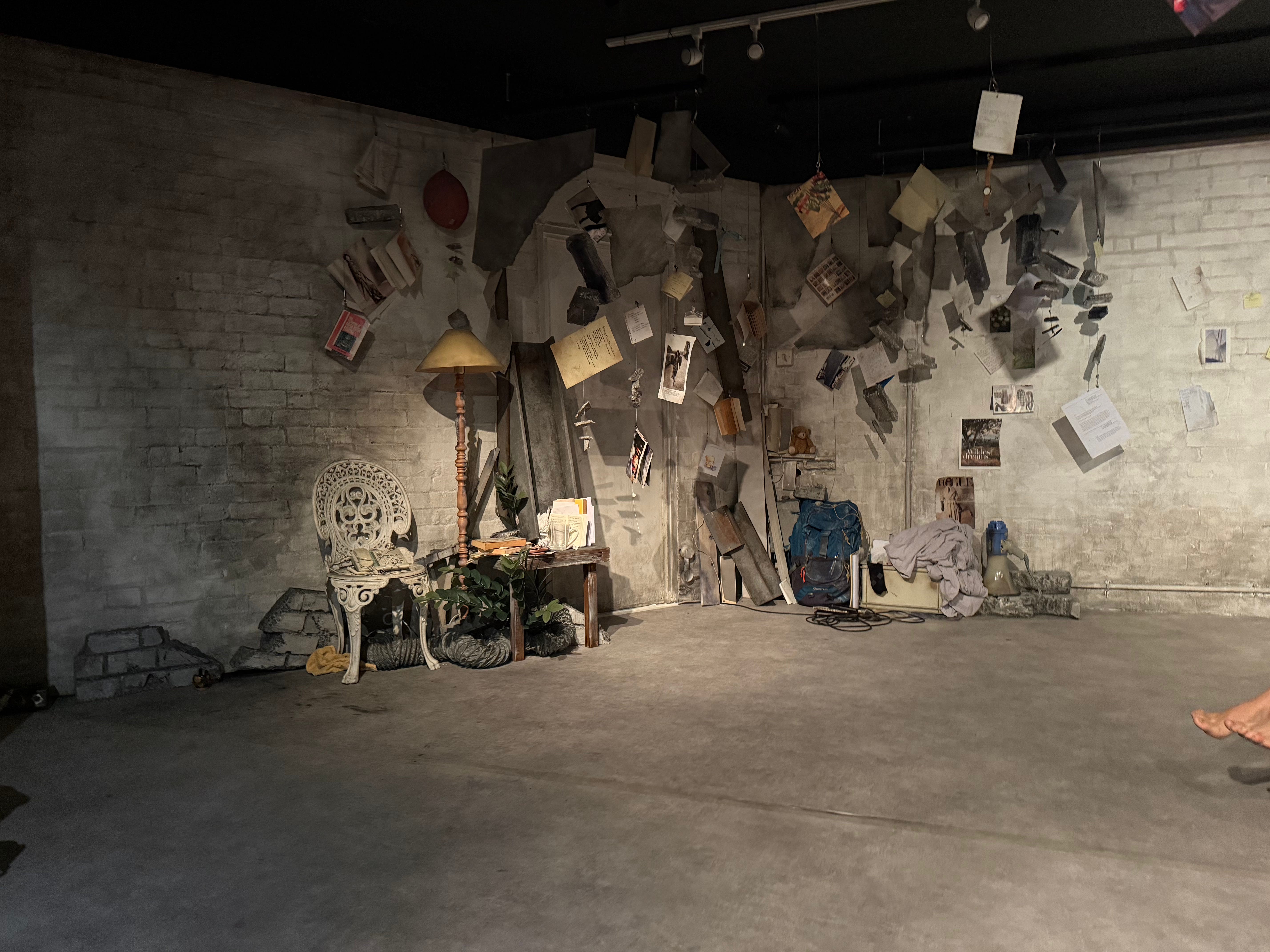
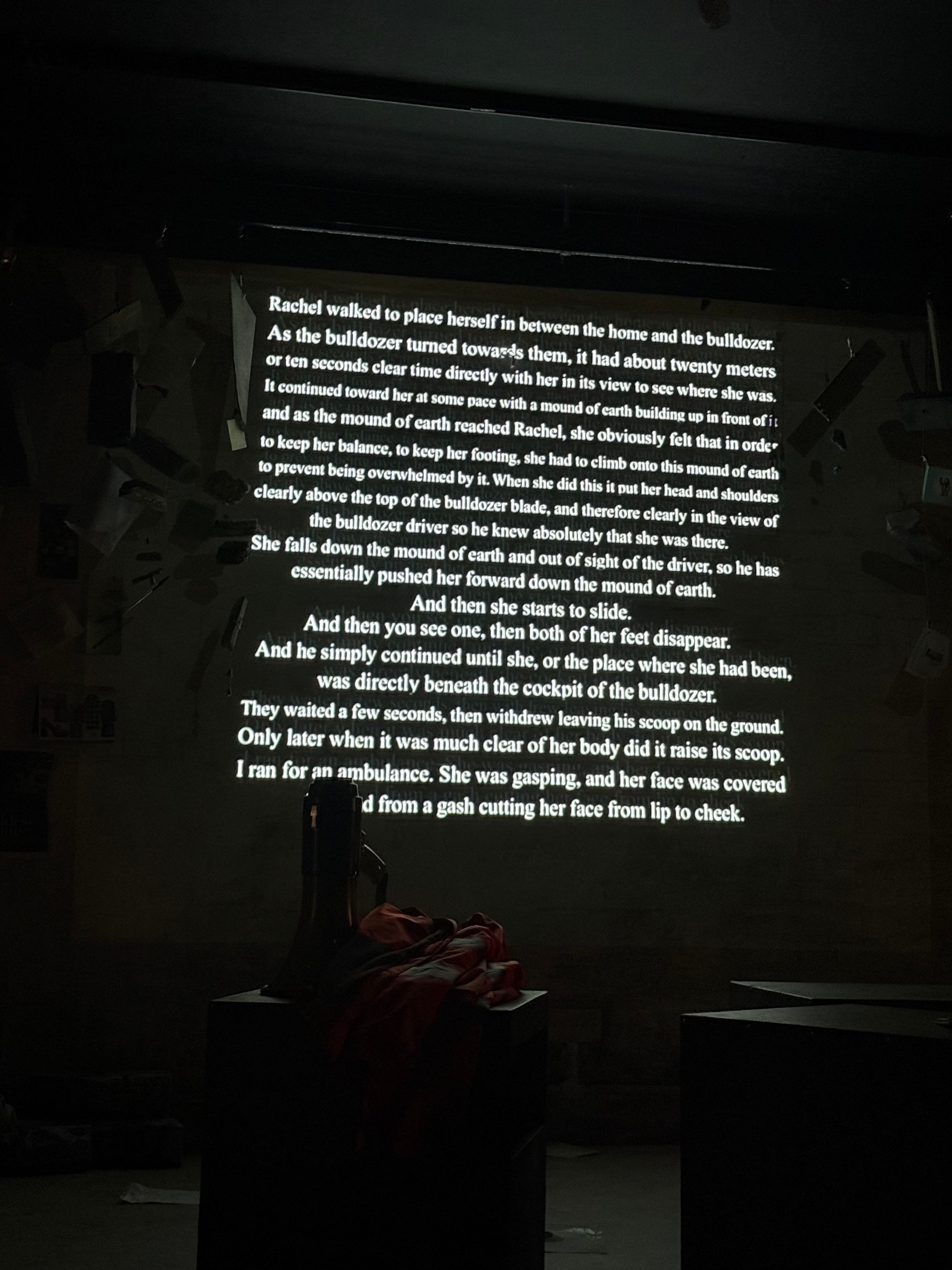
Shortly after it started, she broke her bed up into 6 constituent blocks which all served purposes on the set later - somewhere to sit on, to stand when addressing the crowd etc. The set had a lot more width to it than depth. The walls were decorated, but had spaces on either wing for scribbling with black chalk and she’d do so several times during the play.
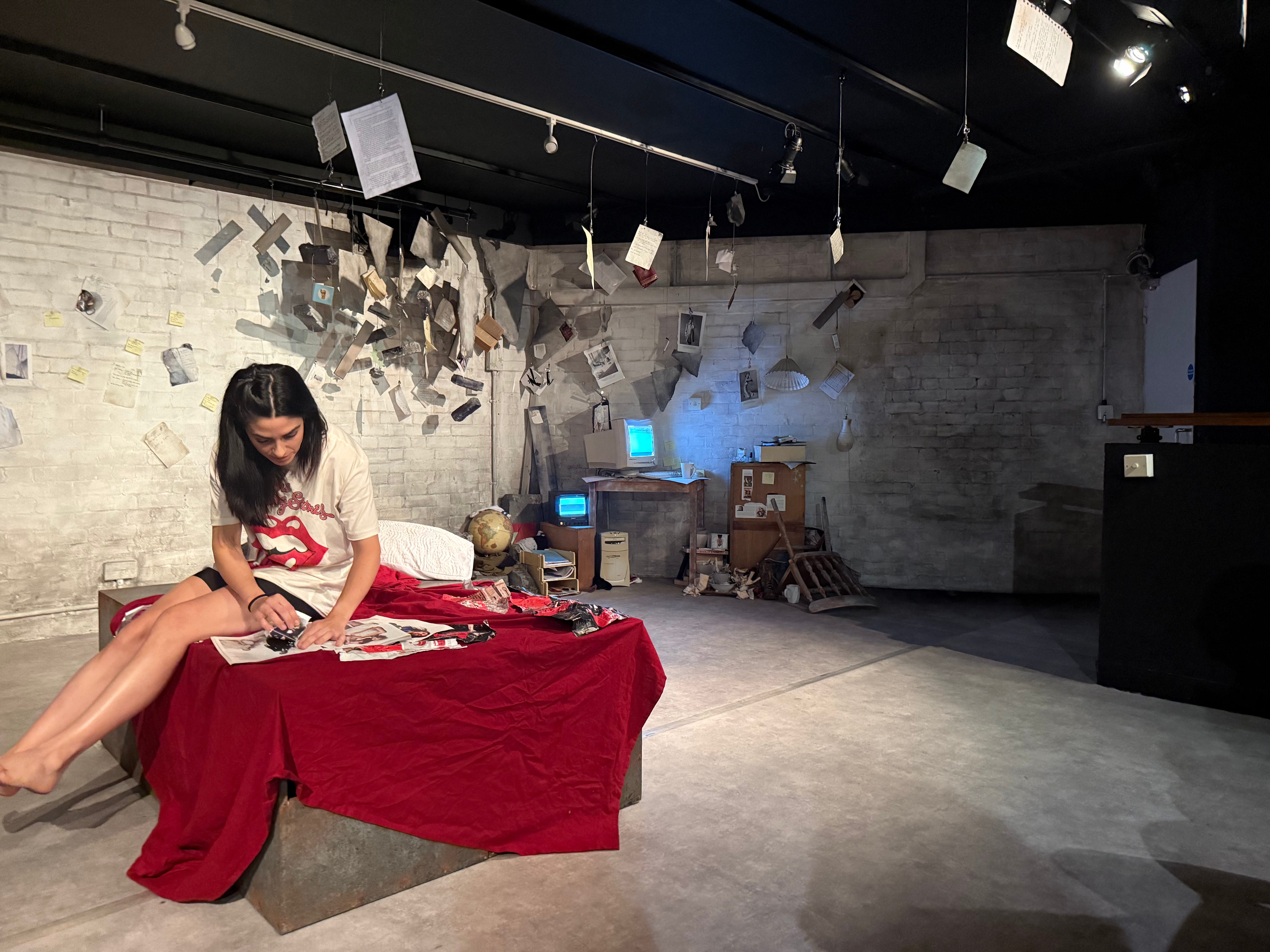
She was restless. Her brother and sister were high flyers, but she shunned that in favour of something that made a difference. She started off in her local area before joining the nascent international humanitarian group because she wanted to make more of an impact.
In Gaza, she was welcomed by many she met. They appreciated her efforts and warm nature. The people she met and stayed with were just ordinary everyday people, and she felt they faced injustice for being mixed up in a conflict. At the time there was supposed to be peace, but there was occupation, enforced heavy-handedly. The houses she stayed at hosted her with hospitality, refusing to take anything. They re-iterated that they’re not a hotel - they were just grateful for her presence.
We were getting dates so that we could see how far into her visit she was - it was taken from diary entries and often she’d read them out in that form. She talked about what she would do for the cause when she returned to USA, so she was clearly planning for the future. Within a week, two weeks, there had been clashes and skirmishes. The international status of the volunteers offered some protection against the excesses of the trigger-happy occupying forces, but they were not gracious about it, often flying too close to the bone for comfort.
She sparked up a smoke, a legally allowed clove cigarette used as a prop in theatre (indoors). I don’t think I’ve been this close to a stage cigarette since the ban came in. She had a few puffs and then let it burn in the ashtray. I was mere metres away, and it was pretty pungent, burning and lingering for around 10 minutes.
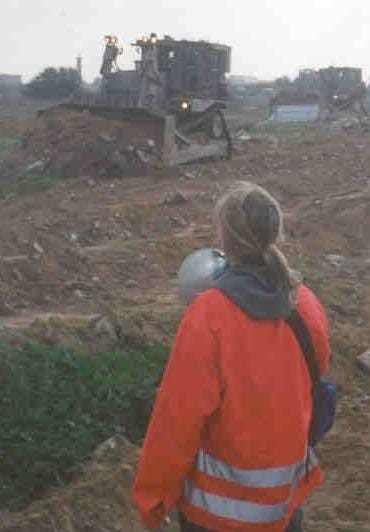
There was a moment she donned the hi-vis jacket and spoke through the megaphone. This outfit matched that she wore on the day she died, but it was used here in an earlier scene, a similar situation.
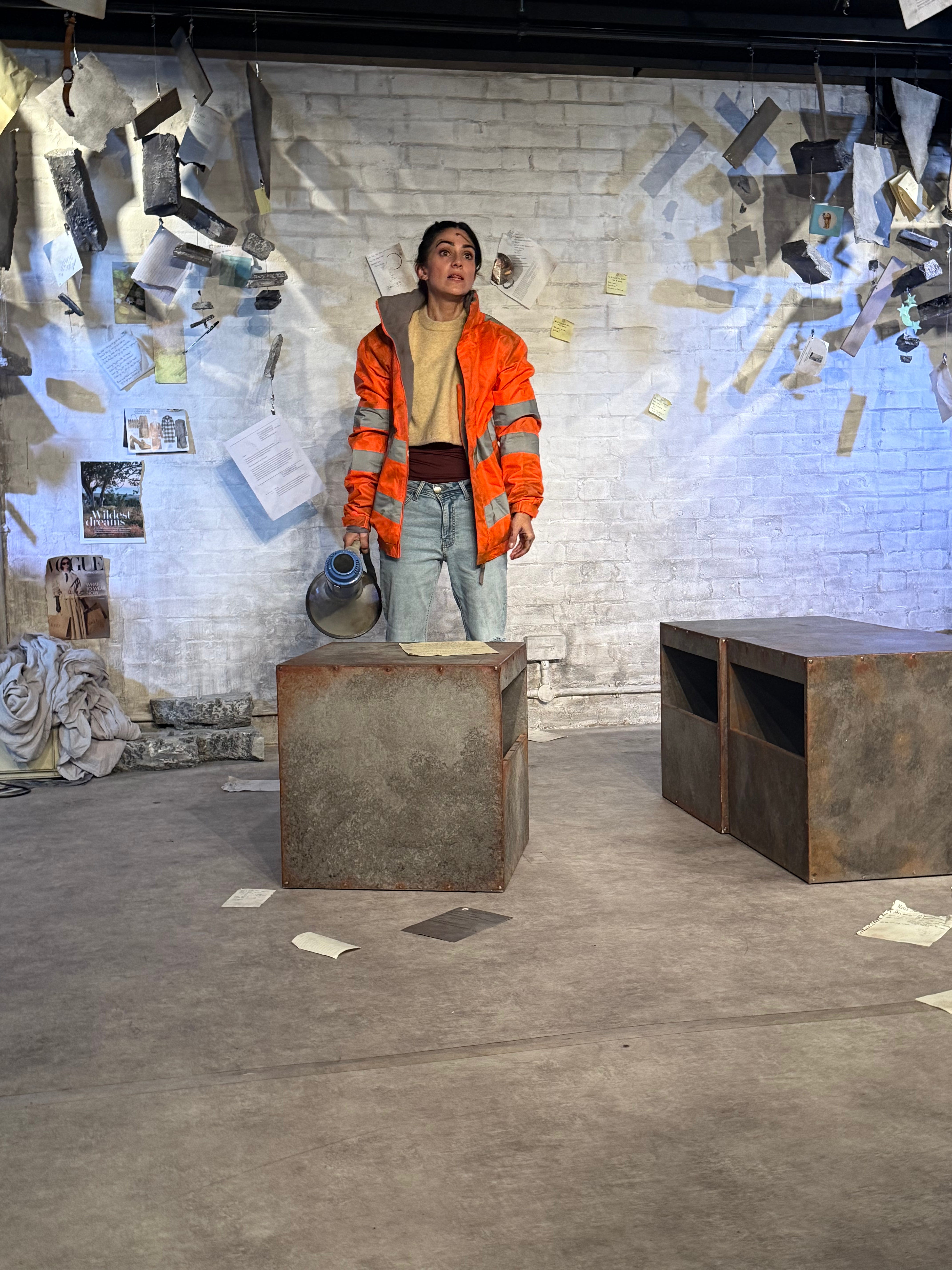
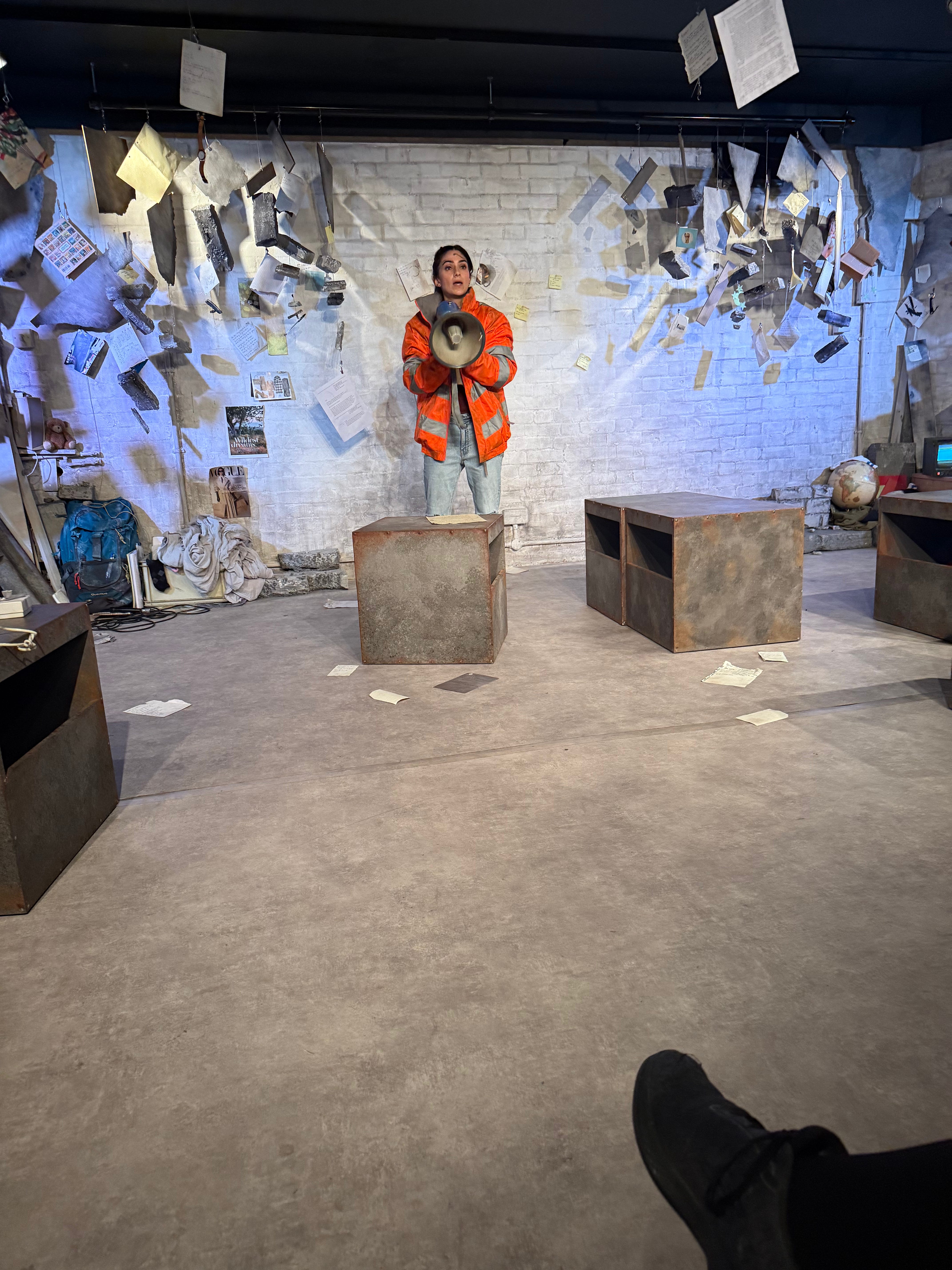
You could sense her anger and frustration escalate with each interaction, each setback, each unfair act that continued to oppress her hosts. I knew how it ended. I’d caught up on the aftermath too, so there was a tinge of sadness and anger towards her fate throughout, growing as the story proceeded to the grim climax.
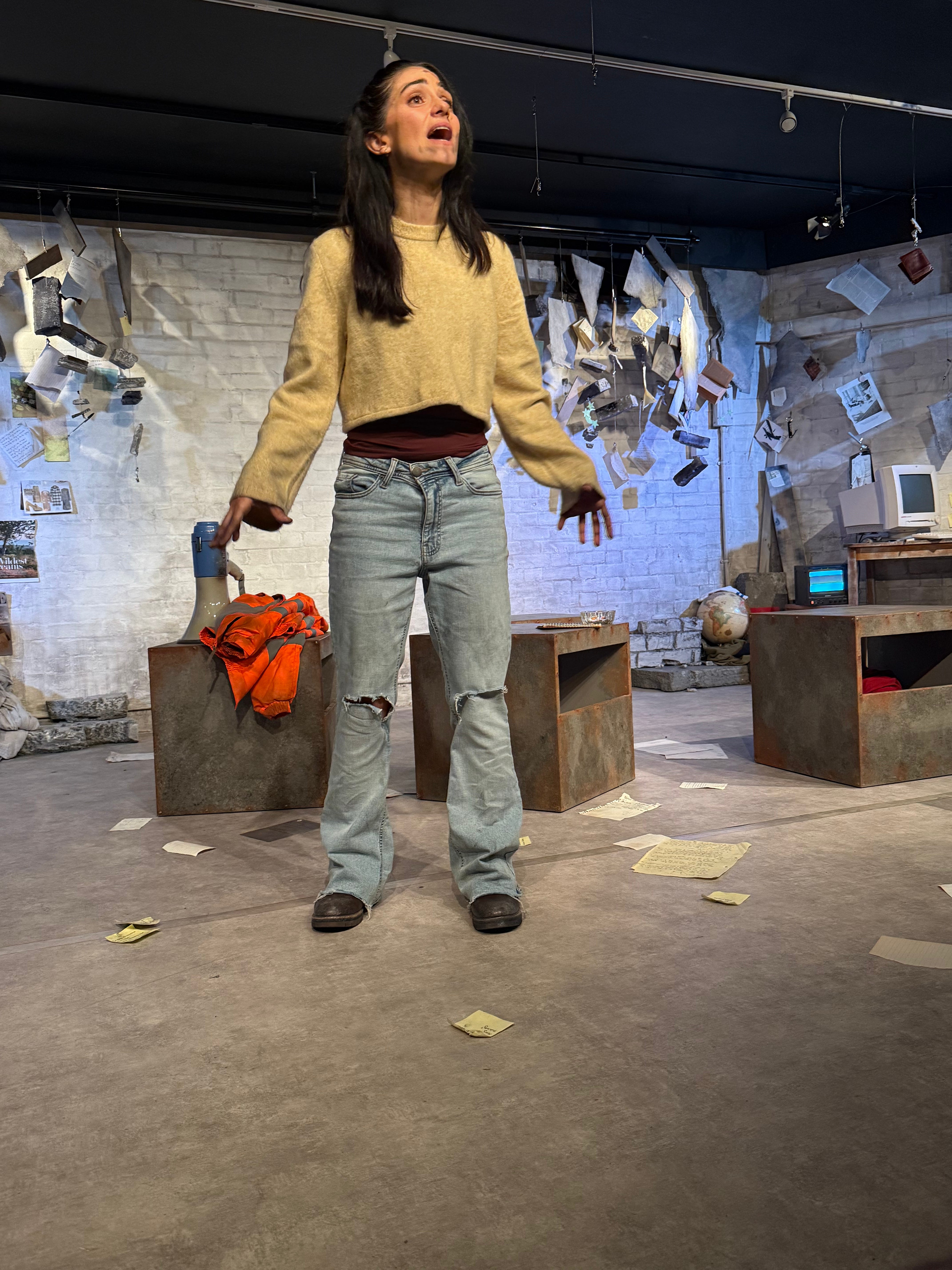
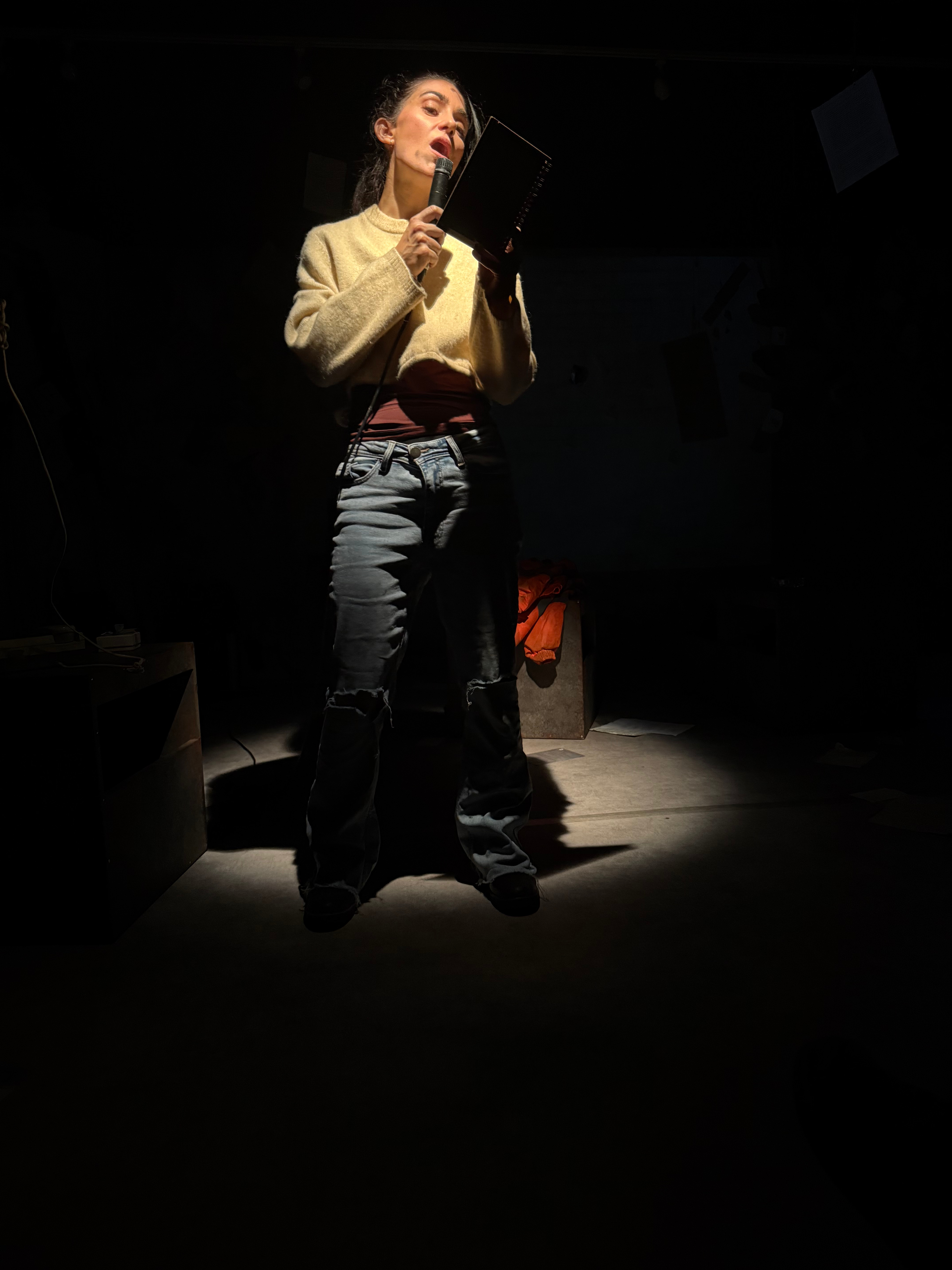
We reached the fateful end. The character exited the stage through a door, and a factual eye-witness statement from a colleague from the same humanitarian organisation was shown on the screen paragraph by paragraph detailing how she died at the hands of a stubbornly belligerent combatant in an armoured bulldozer provided by her home nation. It was a powerful climax. We were invested in the plight of the residents and the actions of an idealistic young activist trying to make a difference in a difficult environment. It moved some to tears.
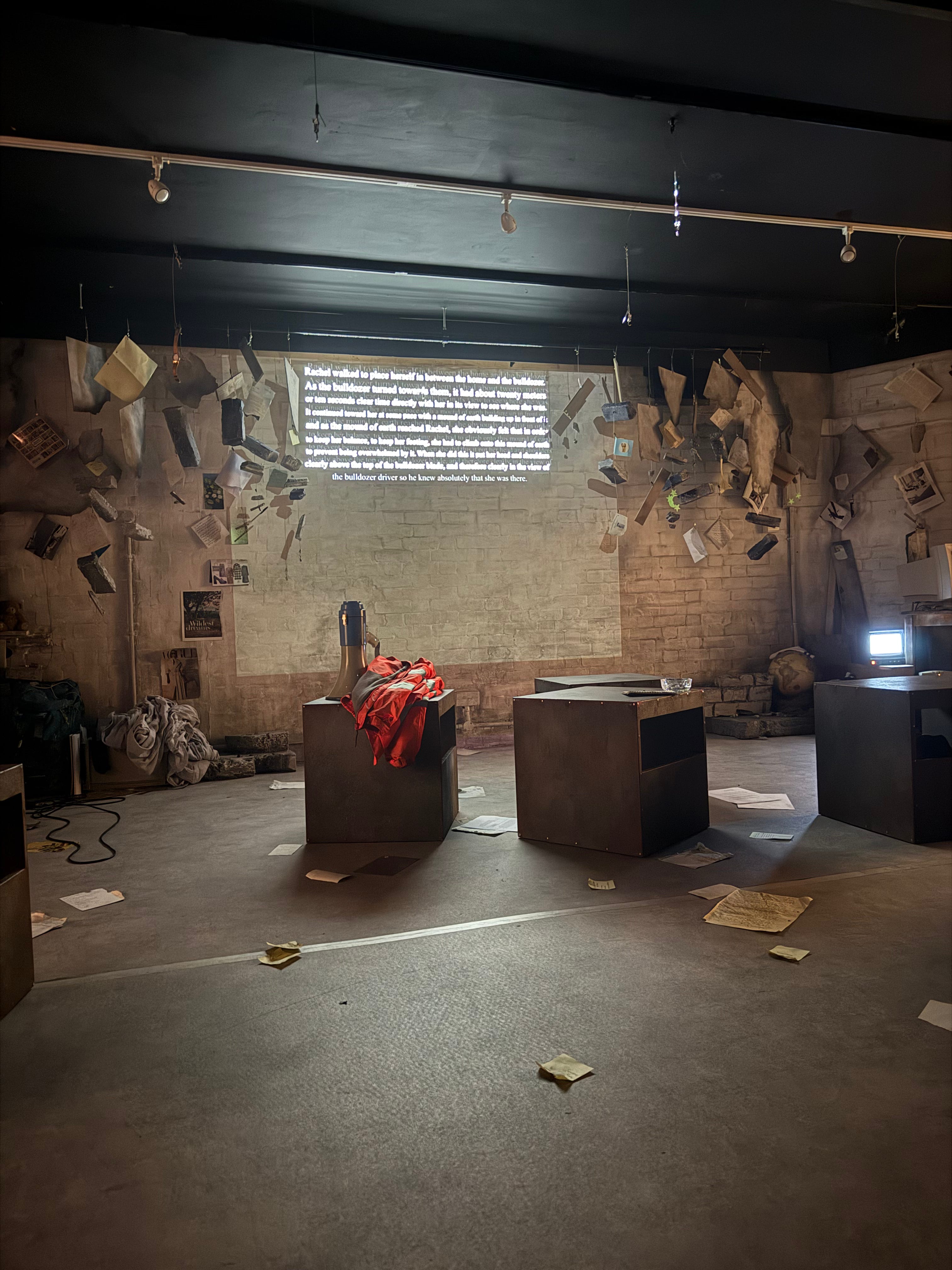
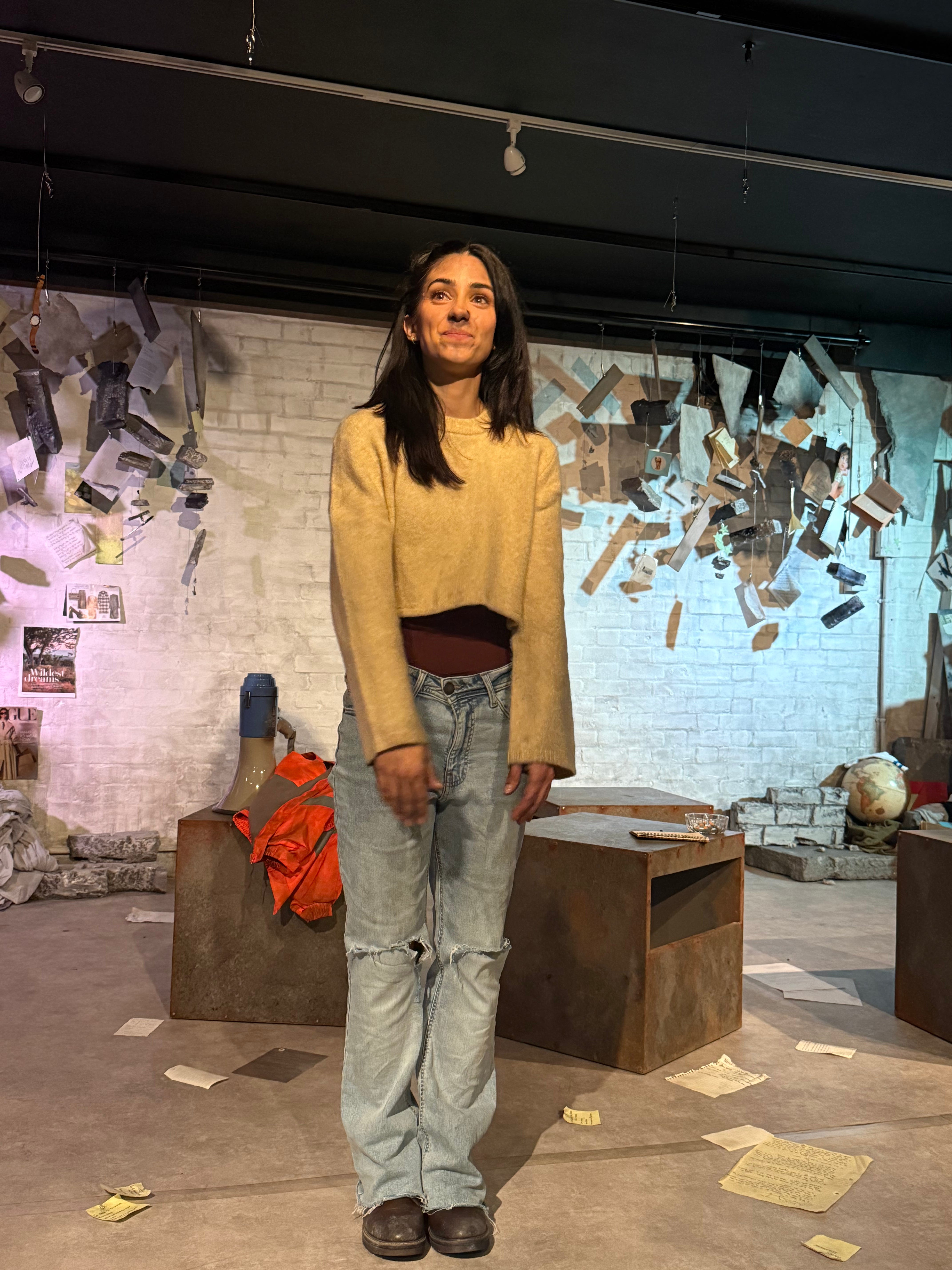
Cassie Bradley returned to the stage to bow. We were still processing it - knew how it ended, but that doesn’t alter the impact. I thought she was brilliant. I’m not the best gauge of the intricate elements of an actor’s performance. I was once again wowed by the ability to remember, recite, deliver 90 minutes of dialogue without stumbling. Kudos to anyone who manages that. One blogger was critical of it, and gave the show 2*, saying only the climax tapped into the emotion. Another gave it 5 stars and another 2.5 out of 3. I thought she was captivating and did the role justice - very impressive to me. I’d give this a solid 8, but place extra importance on the value of the story being told - it’s not just fiction that exists only on the stage, that ceases to have value once the curtain falls. It was a story that needs to be told, that needs to be spread, so her memory, legacy and work can live on.
Aftermath
The blackout on stage wasn’t the end of the story. It was the end of Rachel’s life, but that started a new chapter - ‘accountability’ and impunity. It’s long said Israel is USA’s only ally in the middle east, and they tolerate a lot to maintain that relationship. I didn’t see any support during the War of Terror or the Iraq invasion. Both wars were hugely flawed and unnecessary, and I never felt comfortable with us (UK) rampaging in after USA for the sake of the special relationship, one which the orange buffoon disregards anyway for trivial slights. I am glad from a pacifist perspective that a country chose not to pile in, but it does need to be asked why the only ally in the region opted to sit it out. Only motivated by self-interest? This happened shortly before the Iraq invasion, so their absence was conspicuous but unchallenged. Where USA did massively let itself, Rachel and the Corrie family down is the aftermath. USA refused to condemn Israel. USA refused to hold its own inquiries. USA allowed Israel to treat it as an internal military matter, one which was effectively dismissed pathetically with practically no ramifications. State endorsed slaughter and even an American passport wasn’t enough to defend her in life or in death.
The entire saga was just another instalment in a protracted and bloody dispute with an unjust imbalance of power. A woman with a megaphone and hi-vis vs an armoured bulldozer. A captive population, unarmed, subject to sanctions, restrictions and ground invasions and air attacks. One person’s sacrifice was not enough to change the narrative, and without this play, her sacrifice would’ve been hidden away in the annals of history.
Dedicated to Rachel Corrie, who lost her life fighting for freedom and fairness for others.